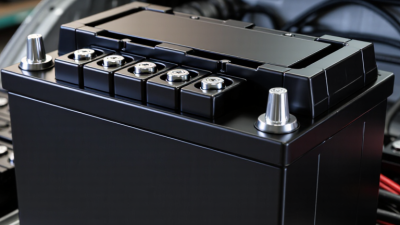
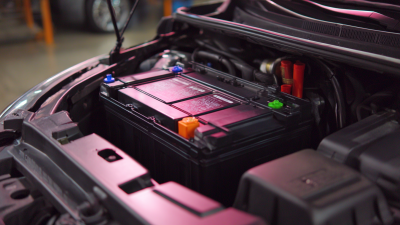
An EFB battery is an enhanced flooded lead-acid battery, built for vehicles that place extra demands on the starting system. The letters stand for Enhanced Flooded Battery. You may find one beneath the hood of a car with stop-start technology, where the engine shuts off at a traffic light and must restart moments later. It is designed to handle more frequent charge-and-discharge cycles than a conventional flooded battery.
Battery expert Isidor Buchmann, founder of Battery University, emphasizes matching a battery to its application. A fair paraphrase of that guidance is: “Choose a battery for the work it must handle.” That principle matters with EFB batteries. They can suit many entry-level stop-start systems, but they are not a universal upgrade. Vehicle specifications, battery size, terminal layout, and charging requirements all matter.
Look at the label, then check the vehicle manual or ask a qualified technician before replacing the battery. A battery that fits the tray may still be the wrong type. EFB batteries are generally more cycle-resistant than standard flooded batteries, while AGM batteries are often built for more demanding electrical loads. Still, these categories do not tell the whole story. Driving habits, accessories, temperature, and maintenance can affect service life. A short commute with repeated starts may be harder on a battery than a longer, steady drive. The name sounds technical. The practical question is simpler: can this battery reliably meet your vehicle’s daily demands?
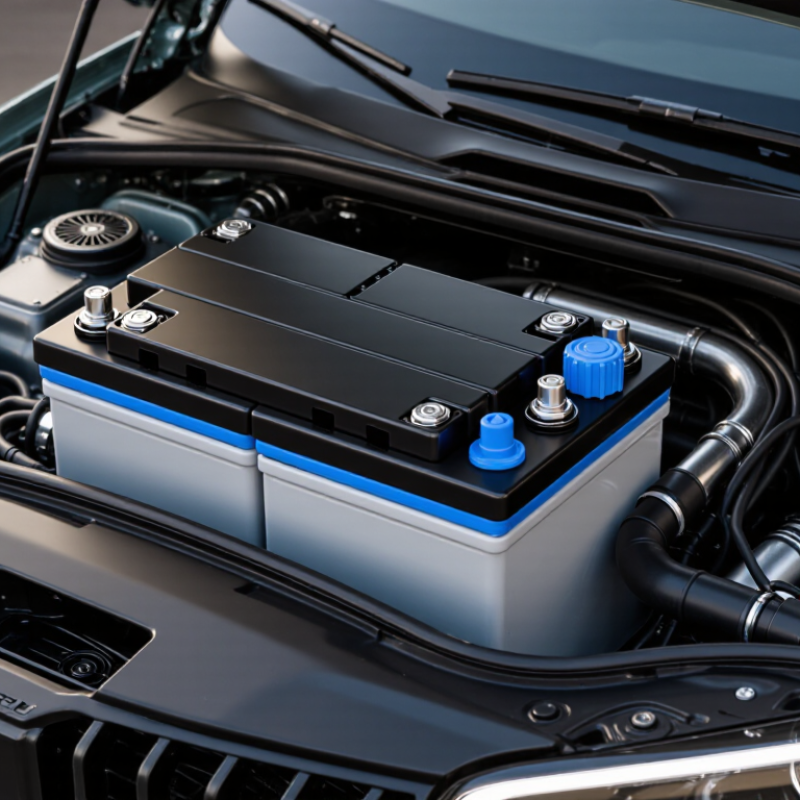
An Enhanced Flooded Battery (EFB) is a type of lead-acid battery designed to start a vehicle’s engine and supply electrical power. Like a conventional flooded battery, it contains liquid electrolyte around lead plates. Its internal design is strengthened to handle more frequent charging and discharging. That matters when an engine repeatedly shuts off at traffic lights and restarts moments later. EFB does not mean maintenance-free in every situation.
EFB batteries are commonly fitted to vehicles with basic start-stop systems. They can also suit some cars with higher electrical demands, depending on the vehicle’s design. An EFB is more cycle-resistant than a conventional flooded battery, but it is not the same as an AGM battery. The distinction can be easy to overlook. Check the vehicle manual before replacing one; choosing a battery by size alone may cause charging or compatibility problems.
Tips: Match the replacement battery type to the vehicle specification. Keep the terminals clean and secure, and watch for slow cranking or start-stop features that stop working. Cold weather can reveal a weakening battery. A quick test is useful, though no single symptom proves the battery is failing.
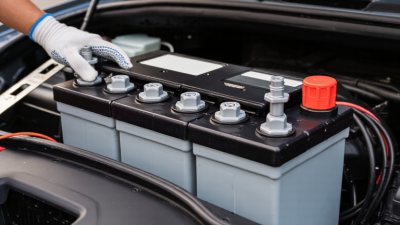
An EFB, or enhanced flooded battery, is a lead-acid battery with liquid electrolyte and upgrades for frequent engine restarts. Its six cells provide a nominal 12 volts. Reinforced plate structures and separators help limit damage as the battery cycles through repeated starts and stops. Some designs also use carbon-enhanced materials to improve charge acceptance; details vary by model.
During a restart, the battery sends a brief, high current to the starter motor. While the engine runs, the alternator replaces that charge. In stop-start traffic, however, the battery may face repeated discharge and recharge before it is fully replenished. EFB construction is designed for this pattern, but it does not eliminate wear. The European standard EN 50342-1:2015 evaluates starter batteries using tests that include charge acceptance and cycle endurance. That matters. Battery life figures are meaningful only when test methods and operating conditions match. A short, cool commute may be harder on an EFB than a longer drive, because the alternator gets less time to recharge it. This detail is easy to overlook.
| Aspect | Details | Why It Matters |
|---|---|---|
| Meaning of EFB | EFB stands for Enhanced Flooded Battery. It is a lead-acid battery with liquid electrolyte and design improvements intended to support more frequent charge-and-discharge cycles than a conventional flooded starter battery. | It is designed for vehicle electrical systems that place greater demands on the battery than occasional engine starting alone. |
| How the technology works | EFB construction commonly uses strengthened plate and separator designs. These features help the battery tolerate repeated cycling and accept charge more effectively than a standard flooded battery. Exact construction varies by battery design. | Improved cycling capability helps support repeated engine restarts and electrical loads during stop-start driving. |
| Electrolyte type | An EFB is a flooded battery: its lead plates are immersed in liquid electrolyte. It is not an absorbed glass mat (AGM) battery, in which electrolyte is held in a glass-fibre mat. | The two technologies have different construction and charging requirements, so they should not be treated as interchangeable without checking the vehicle specifications. |
| Typical vehicle use | EFB batteries are commonly fitted to passenger vehicles with basic start-stop systems, where the engine may shut off at a stop and restart when driving resumes. | Frequent restarting makes cycle performance important; the correct battery depends on the vehicle manufacturer's specification. |
| Other possible applications | Depending on the product and system requirements, EFB batteries may also be used in some light commercial vehicles or other applications that need a 12-volt starting battery with enhanced cycling capability. | Application suitability should be confirmed using the equipment or vehicle requirements rather than battery type alone. |
| Compared with a conventional flooded battery | An EFB is generally better suited to repeated cycling and stop-start operation than a conventional flooded starter battery. It remains a flooded lead-acid design. | Replacing an EFB with a standard flooded battery may reduce suitability for a vehicle designed around enhanced cycling performance. |
| Compared with an AGM battery | AGM batteries use a different internal construction and are often selected for vehicles with higher electrical or cycling demands. An EFB is not automatically an equivalent substitute for AGM, or vice versa. | Use the battery technology and specification approved for the vehicle, especially where the charging system or battery monitoring system is calibrated for a particular type. |
| Charging and replacement | Use a charger compatible with the battery type and follow its instructions. When replacing a battery in a vehicle with battery monitoring or energy-management functions, the battery may need to be registered or configured according to the vehicle procedure. | Correct charging and replacement procedures help maintain reliable operation and avoid problems with the vehicle's electrical system. |
Important: Battery specifications and vehicle requirements vary. Check the owner’s manual or battery label before selecting or replacing an EFB battery.
An EFB, or Enhanced Flooded Battery, keeps the liquid electrolyte and vented-cell design of a conventional flooded battery. Its internal parts are strengthened to handle more charge-and-discharge cycles. That matters in vehicles that frequently stop and restart in traffic. The design is still not magic: heat, deep discharge, and poor charging can shorten its service life.
Inside the case, lead plates sit in electrolyte and are separated to prevent contact. EFB plates are generally designed to resist wear, while a polyester scrim may help hold active material in place on the positive plates. Some designs also use additives to improve charge acceptance. Details vary by battery, so one construction feature should not be assumed across every model. The case, terminals, and internal connections must also withstand vibration and repeated current demands.
These design choices make EFB batteries suitable for many start-stop vehicles that need more cycling durability than a standard flooded battery provides. In practice, frequent short trips can still leave a battery undercharged. An EFB is not automatically an upgrade for every car; the vehicle’s specified battery type and charging system matter. That distinction is easy to miss when comparing batteries by size alone.
EFB batteries are commonly used in passenger cars with basic start-stop systems. At a traffic light, the engine may shut down, then restart when the driver moves off. That repeated cycling places more demand on the battery than ordinary starting. EFB construction is designed to handle these frequent starts while still supplying power to lights, displays, and climate controls. The exact fit depends on the vehicle’s electrical design.
Light commercial vehicles, such as delivery vans and service vehicles, may also use EFB batteries. Their stop-and-go routes can mean many starts in one shift, with navigation screens or cabin fans drawing power between them. Some vehicles use an EFB in a 12-volt system that supports these everyday loads. Small detail, big difference. An EFB is not a universal upgrade, though. A vehicle designed for another battery type may need that specific type, so check its manual or existing specifications before replacement. The line between “suitable” and “better” can be less obvious than a parts listing suggests.
An Enhanced Flooded Battery (EFB) uses liquid electrolyte, like a conventional flooded battery, but its internal plates and materials are designed to handle repeated charging and discharging better. That matters in vehicles that switch the engine off at traffic lights and restart it frequently. A conventional battery is generally intended for fewer start cycles and steady accessory use. In practice, an EFB can recover charge more readily after a start, though its performance still depends on temperature, driving habits, and battery condition. Not magic.
AGM batteries differ in construction: their electrolyte is held in fiberglass mats rather than freely sloshing around the case. This design often supports stronger charge acceptance and deeper cycling, making AGM suitable for vehicles with heavier electrical loads or more demanding start-stop systems. EFB is usually a step up from a standard flooded battery, while AGM offers different strengths, not an automatic upgrade for every car. The categories are easy to oversimplify. Check the vehicle’s specified battery type before replacing one; changing from EFB to AGM may require compatible charging settings, and the most expensive option is not necessarily the right fit.
EFB (Enhanced Flooded Battery) batteries are designed for vehicles with start-stop systems. They offer greater cycling durability than conventional flooded batteries, while AGM batteries generally provide still higher cycle life.
Approximate relative cycle life under comparable conditions; conventional flooded battery = 1. Actual performance varies with battery design, temperature, vehicle use, and testing method. Always use the battery type specified for your vehicle.