How to Choose the Right EFB Battery in 2026?
Choosing the right EFB battery in 2026 requires more than matching dimensions. It requires understanding how the vehicle is used, charged, and maintained. An Enhanced Flooded Battery is designed for vehicles with start-stop systems, frequent engine restarts, and moderate electrical demands. However, not every EFB battery suits every car.
Dr. Eberhard Meissner, a respected automotive battery specialist, has emphasized, “The battery is the heart of the vehicle.” That view remains practical today. A weak battery can affect start-stop operation, lighting, infotainment, and driver-assistance systems. The correct choice should match the manufacturer’s voltage, capacity, cold-cranking performance, and physical specifications. Check the label carefully. A few millimeters can prevent secure installation.
Real driving conditions matter. A city driver may restart the engine dozens of times during one commute. A rural driver may place greater demand on cold starts and long periods of inactivity. Temperature, accessory use, charging voltage, and parking habits also influence battery life. These details are easy to overlook.
Look beyond price. Examine warranty terms, reserve capacity, terminal layout, production date, and the brand’s testing standards. Some sellers provide impressive numbers without explaining test conditions. That is not enough.
There is no perfect checklist. Even experienced technicians can misjudge a battery when vehicle history is incomplete. If the car has battery monitoring, replacement may require registration or system calibration. A careful inspection remains essential. In 2026, the best EFB battery is not simply the most powerful option. It is the one that fits the vehicle, driving pattern, charging system, and owner’s expectations.
Define EFB Battery Technology: 12V Construction and 2× Cycle-Life Rating
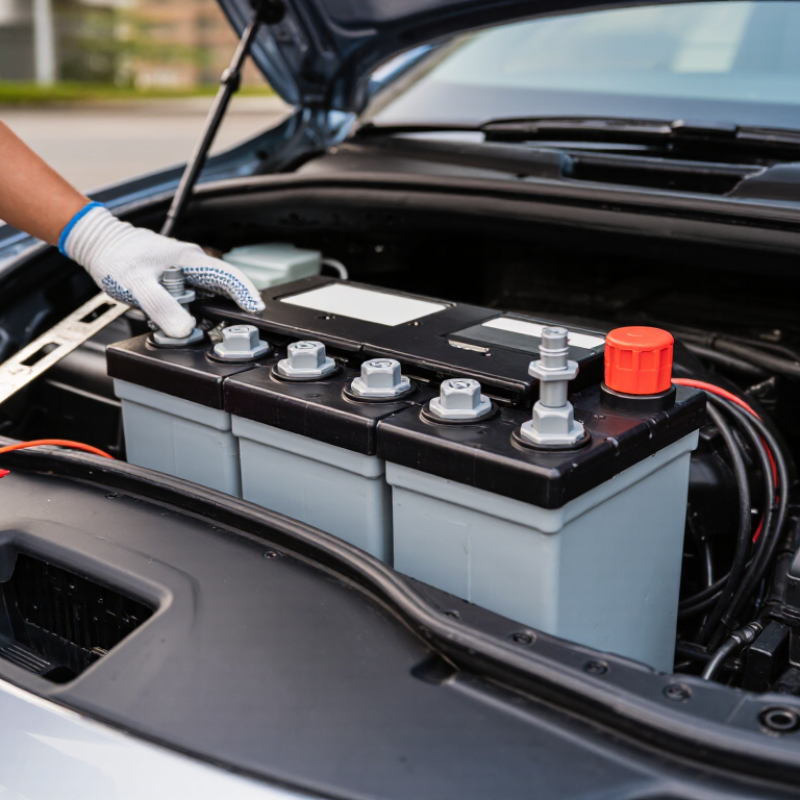
An EFB battery remains a flooded lead-acid battery, but its internal design is strengthened. A typical 12V unit contains six cells, each producing about 2V. Enhanced positive plates, improved separators, and an adapted electrolyte support frequent engine restarts. This suits vehicles with start-stop systems and heavy urban traffic.
The U.S. Department of Energy reports that start-stop technology can reduce city fuel consumption by roughly 4–8%. That benefit increases battery workload. IEC 60095-1 testing helps compare starter-battery performance under defined conditions. However, a 2× cycle-life rating is not universal. It usually means twice the tested cycles of a conventional flooded battery, under a specific test method. Temperature, discharge depth, charging control, and rest periods can change the result. The label alone is not enough. I once focused only on capacity and missed the vehicle’s charging profile. That was an expensive lesson.
Tips: Match the original battery size, terminal layout, Ah rating, and cold-cranking performance. Confirm EFB compatibility in the vehicle manual. Check the battery-management system after replacement. Some vehicles require registration or charging calibration. Avoid choosing by “2×” alone. A battery can have a stronger laboratory result but perform poorly in a hot engine bay. The European Commission’s Joint Research Centre also emphasizes that real-world battery life depends on operating conditions and maintenance, not one headline specification.
Match Vehicle Requirements: Start-Stop Systems and EN 50342 Performance Data
How to Choose the Right EFB Battery in 2026?
Start-stop vehicles need more than a battery with the correct dimensions.
They demand frequent restarting, rapid charge acceptance, and stable power for lights, sensors, and cabin systems. Check the vehicle handbook first. Confirm the required EFB technology, rated capacity, cold-cranking current, terminal layout, and case size. A 70 Ah battery with 720 A may fit physically, yet still fail if the vehicle requires different charging characteristics.
EN 50342 performance data provides a useful comparison point.
The standard covers capacity, cold-cranking performance, charge acceptance, and endurance testing. Read the test sheet instead of trusting a large Ah figure alone. Cold-cranking current matters on a freezing morning. Charge acceptance matters after short urban trips. Endurance data matters when the engine restarts repeatedly at traffic lights. These figures describe laboratory conditions, not every real road.
The risk is practical.
ADAC’s 2024 breakdown report attributed 44.1% of roadside failures to starter-battery problems. That figure should change how drivers judge “good enough.” I have seen buyers choose the cheapest matching case, then overlook battery registration or battery-management calibration. That decision can reduce charging accuracy. It may also shorten service life. Check the replacement battery against the original specification and the vehicle’s start-stop design. Perfect selection is difficult. Even EN results cannot predict every winter commute, overloaded accessory circuit, or neglected charging system.
Select Capacity and CCA: Compare Ah Ratings and EN Cold-Cranking Amps
Choosing an EFB battery in 2026 starts with two numbers: capacity in Ah and cold-cranking performance in EN CCA. Ah describes how much charge the battery can deliver over time. EN CCA measures starting strength at -18°C under the EN 50342 test method. They are related, but not interchangeable.
Match the original Ah rating unless the vehicle manual permits an upgrade. A 70 Ah battery may support repeated short trips better than a 60 Ah unit. Yet higher capacity does not guarantee easier starting. Compare EN CCA with the vehicle’s required value, especially in cold regions or after overnight parking.
The European Automobile Manufacturers’ Association reported that EU cars averaged 12.5 years old in 2022, according to Vehicles on European Roads 2024. Older vehicles may have weaker starters, thicker oil, or higher electrical leakage. That changes the practical choice.
Check the label, not only the sales description. Confirm case size, terminal position, polarity, and charging compatibility. EFB batteries are designed for vehicles with basic start-stop systems and frequent cycling.
The EN 50342 standard also includes capacity and endurance testing, but laboratory results cannot copy every traffic pattern. This is where I often see mistakes: buyers chase the biggest CCA number and ignore Ah, fit, or battery monitoring calibration.
A cautious choice is usually the manufacturer’s specified Ah with equal or higher EN CCA. Keep the receipt. Test the charging voltage after installation. Recheck it after several weeks of short urban trips.
Verify Fitment and Standards: BCI Dimensions, Polarity, and ISO 16750 Testing
Choosing an EFB battery in 2026 starts with physical fitment, not marketing claims.
The Battery Council International Replacement Battery Data Book maps Group sizes, case dimensions, terminal locations, and polarity. Match the listed length, width, and height against the vehicle tray. A few millimeters can prevent secure clamping.
Check polarity from the front terminal view. Positive-left and positive-right layouts are not interchangeable. Cable reach matters. So does hold-down geometry. An EFB with the correct capacity may still fail installation if its vent position or base ledge differs. Workshop checks should include tray clearance, terminal cover space, and cable tension. I have seen “same-size” batteries fit loosely because the case height was assumed, not measured.
Testing evidence deserves equal attention. ISO 16750 evaluates electrical, mechanical, climatic, and chemical loads for road-vehicle components. Its procedures include vibration, temperature exposure, shock, and supply-voltage variation. Request test conditions, not only an ISO reference. The standard does not create one universal pass level; severity depends on the vehicle application. This detail is easy to overlook. The European Association of Automotive Suppliers’ reliability guidance also treats mounting, vibration, and temperature as linked durability factors. Choose an EFB whose report identifies the tested configuration, polarity, terminals, and mounting method. A perfect label is not proof. Supplier documents can still contain gaps.