China Best EFB Car Battery Supplier for Global Buyers?
Choosing the right China-based supplier is not just a price comparison. For global buyers, an efb car battery must match the vehicle’s electrical demands, climate, and duty cycle. Enhanced flooded batteries are commonly used in vehicles with start-stop systems, but specifications vary by model. Check capacity, cold-cranking performance, dimensions, terminal layout, and reserve capacity against the vehicle requirements. Small mismatches matter. A battery that looks suitable on a product page may not fit the tray or meet the required starting performance.
A reliable supplier should provide clear datasheets, traceable quality records, and practical answers about production and export packaging. Ask how performance is tested, what warranty terms apply, and how defects are handled after delivery. Request recent test documentation for the exact battery model, not a generic product family. Compare sample results with the published specifications. This takes time. It is worth it. A polished brochure alone does not prove consistent quality, and a low quote may exclude important logistics or support. This guide explores how buyers can assess Chinese EFB manufacturers, verify claims, and compare suppliers with fewer assumptions. There is no single “best” choice for every market; the dependable option is the one that meets documented needs and communicates clearly when details remain uncertain.

What EFB Car Batteries Are and How They Differ from Standard Batteries
An EFB, or Enhanced Flooded Battery, is a lead-acid battery designed for vehicles that make frequent stops and restarts. Its internal plates and active materials are generally built to handle repeated cycling better than those in a conventional flooded battery. The exact construction varies by battery, so the EFB label alone does not tell the whole story. That distinction is easy to miss.
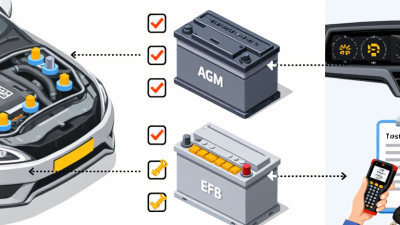
In city traffic, the engine may stop at a red light, then restart moments later. An EFB is designed to support this pattern and accept charge more readily after each restart. A standard flooded battery is usually intended for less demanding starting and charging cycles. More demanding, not invincible. EFB batteries can still lose capacity when left discharged or exposed to excessive heat. They are also not automatically interchangeable with AGM batteries, which use a different internal design. Before replacing a battery, check the vehicle handbook or the specification printed on the existing unit. A small mismatch in battery type can affect start-stop performance, and vehicle requirements differ.
EFB vs. Standard Flooded Car Batteries: Relative Cycle Endurance
EFB (Enhanced Flooded Battery) technology is designed to handle more frequent charge-and-discharge cycles, making it suitable for many start-stop vehicles. The chart uses a relative index: standard flooded battery = 100, with EFB shown at up to around 200. Actual performance varies by battery design, test conditions, and vehicle use; this is an indicative comparison, not a guaranteed lifespan.
How to Evaluate EFB Battery Suppliers in China
A reliable EFB supplier should provide more than a catalogue rating. Compare capacity, cold-cranking performance, charge acceptance, and cycle life under partial-state-of-charge conditions. Request test reports referencing EN 50342-1 and, where applicable, EN 50342-6. Check the test temperature, method, and sample size; figures without test conditions are hard to compare. One detail is easy to miss: a strong sample result does not prove consistent batch quality.
Assess factory controls as well as product data. Ask how incoming materials, plate curing, assembly, and final inspection are recorded. During an audit, look for traceable batch codes and actual inspection records, not only polished presentations. The Battery Council International reports a lead-battery recycling rate of nearly 99% in the United States. This is a useful sustainability benchmark, not proof of any individual supplier’s practices. Request evidence of material traceability and responsible recycling arrangements.
Tips: Ask for recent third-party test reports, warranty-claim data, and a sample from a normal production run. Compare it with the approved specification after delivery. Confirm packaging, terminal protection, and storage guidance for the shipping route. If a supplier will not explain a failed test or a changed production process, pause and ask again. Small inconsistencies matter.
Manufacturing Quality, Certifications, and Product Testing
An EFB supplier’s quality claim should be traceable to factory controls and repeatable test results.
Ask for batch-level records covering plate formation, electrolyte filling, sealing, and final inspection. ISO 9001 and IATF 16949 address quality-management systems; neither is, by itself, proof that every battery meets its performance claims. Small details matter. A useful audit checks calibration records, rejected units, and corrective actions—not just certificates on a wall.
For product testing, request capacity, charge-acceptance, cycling, vibration, and leakage results, with test conditions and sample sizes stated. CENELEC’s EN 50342-6 sets out test methods for lead-acid batteries used in micro-cycle applications, relevant to start-stop duty. Compare results against the standard and the supplier’s declared specifications. S&P Global Mobility reported that the average age of U.S. light vehicles reached 12.6 years in 2024, making dependable replacement performance commercially relevant. That figure is not a battery-life measure, though. Test reports can also miss real-world variation, so buyers should verify lot traceability and request periodic independent checks.
Export Capabilities, Customization, and After-Sales Support
Global buyers assessing an EFB car battery supplier should look beyond quoted prices. Export readiness shows in practical details: clear packing lists, consistent carton markings, and documents prepared before shipment. Ask how each production batch is identified and how the supplier handles changing delivery schedules. Details matter. EFB batteries are heavier than many standard units, so packaging and pallet plans should be checked against the route and handling conditions. A sample shipment can reveal gaps that a sales presentation may miss.
Customization may cover capacity, dimensions, terminal layout, labels, and packaging, depending on the supplier’s production setup. Share vehicle requirements and target markets early, then confirm specifications against drawings and sample measurements. Do not rely on a label mock-up alone. Small fitment differences can cause installation problems. Some requests may also affect production time or minimum order quantities, so confirm these points in writing before ordering.
After-sales support is easiest to assess before a problem occurs. Ask who receives technical questions, what batch information is needed, and how warranty claims are reviewed. Test records, installation details, and clear photos can help speed up an investigation. Response times should be agreed, not assumed. Even a capable supplier may struggle when evidence is incomplete or communication passes through several parties. That part deserves honest planning.
How Global Buyers Can Match Suppliers to Their Needs
China Best EFB Car Battery Supplier for Global Buyers?
How Global Buyers Can Match Suppliers to Their Needs
Choosing an EFB supplier starts with the vehicles you serve, not a catalogue price. Check battery dimensions, terminal layout, capacity, and cold-cranking performance against the vehicle maker’s specifications. EFB batteries are commonly used in vehicles with start-stop systems and higher cycling demands than standard flooded batteries. They are not automatically interchangeable with AGM batteries. Ask suppliers for test reports and clear product data. Details matter.
Tips: Send a sample vehicle list and target specifications before requesting a quotation. Confirm minimum order quantities, production lead times, packaging, and warranty terms in writing. A neat spreadsheet can still mislead.
For a reliable comparison, ask how the supplier controls cell assembly, charging, and final inspection. Request consistent test criteria across samples and production batches. If possible, arrange an independent inspection before shipment. Also check whether the supplier can explain storage conditions and suitable charging guidance for your market. That response can reveal practical experience. Do not judge support from one polished email; test how quickly and clearly the team handles a specific technical question. Some needs may remain unclear until field feedback arrives, so leave room to review specifications after trial orders.