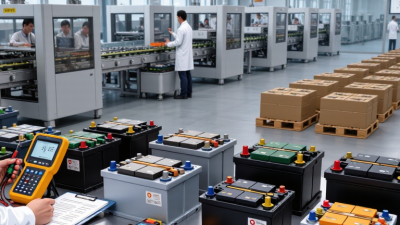
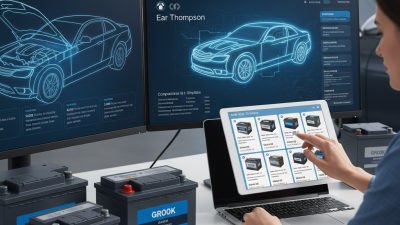
An automotive battery is not one universal product. In 2026, the right type depends on whether a vehicle needs engine starting, stop-start support, or electric propulsion. These jobs place different demands on capacity, charging speed, vibration resistance, and cost. A battery that fits the tray may still be wrong for the vehicle’s electrical system.
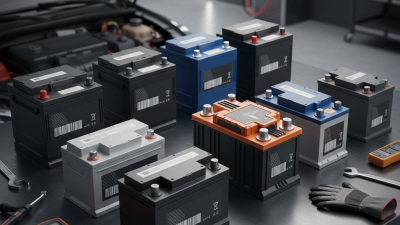
For many petrol and diesel cars, flooded lead-acid batteries remain a familiar, affordable choice. Enhanced Flooded Batteries, or EFBs, are designed for some stop-start systems and handle repeated cycling better. Absorbent Glass Mat batteries, known as AGMs, offer stronger cycling performance and are common in vehicles with heavier electrical loads. Small differences matter. Replacing an AGM with a basic flooded battery, for example, may not suit a car designed around AGM charging behavior.
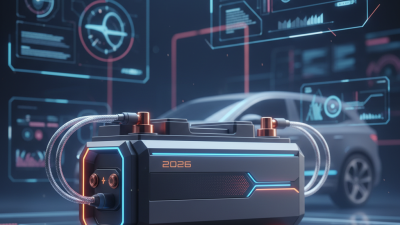
Electric vehicles use high-voltage lithium-ion packs, while their chemistry and pack design vary by model. Lithium iron phosphate, or LFP, is valued for durability and thermal stability; other lithium-ion chemistries can prioritize energy density. That distinction deserves care: no chemistry is best in every vehicle or climate. Battery availability, manufacturer specifications, and local operating conditions all affect a sensible choice.
This guide compares the leading automotive battery types in 2026, from conventional starter batteries to EV traction packs. It also looks at lifespan, maintenance, performance, and practical replacement considerations. The labels can be confusing, and specifications change. Check the vehicle manual and battery requirements before treating a general comparison as a recommendation.
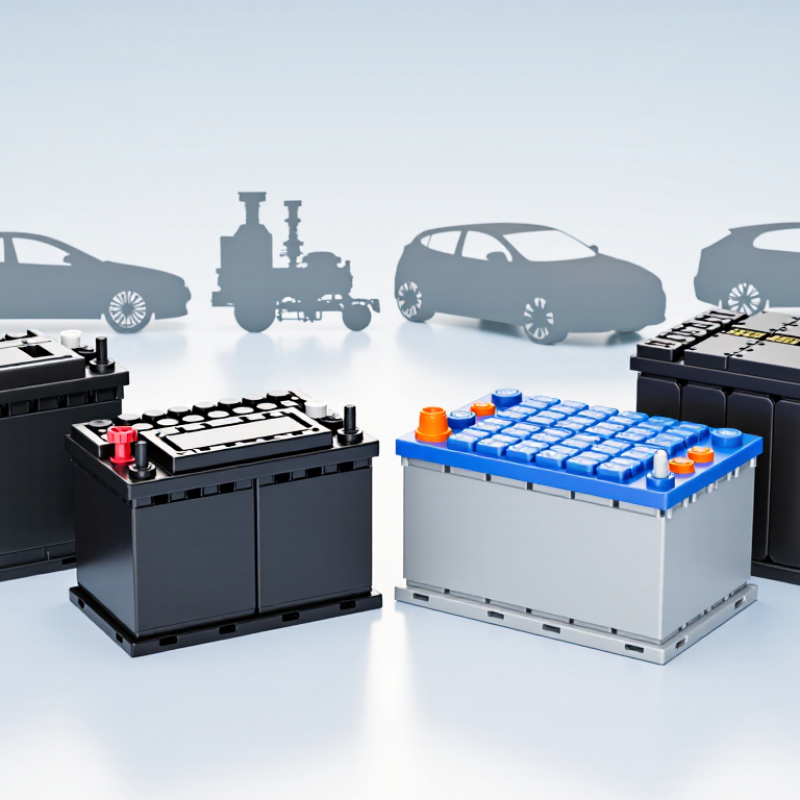
Automotive batteries serve different jobs, even when their cases look similar. SLI batteries provide a brief, high-current burst to start the engine, then power lights and onboard electronics. They are not designed for repeated deep discharge. Hybrid batteries handle frequent charging and discharging during acceleration and regenerative braking. Many conventional hybrids use nickel-metal hydride or lithium-ion packs. Plug-in hybrids and full EVs rely more heavily on traction batteries, which store energy for electric driving.
Scale matters. The International Energy Agency’s Global EV Outlook 2024 reports that electric-car battery demand reached about 750 GWh in 2023, roughly 40% higher than in 2022. That figure reflects the rapid growth of EV traction applications, not the SLI market. Chemistry and pack design vary, so battery labels alone do not tell the whole story. The categories can blur, especially in plug-in hybrids; real-world duty cycles deserve more attention.
Tips: Match the replacement to the vehicle’s specified chemistry, voltage, and capacity. Check the date code and terminal condition, too. A quick visual check helps, but it cannot confirm battery health. Have a weak battery tested under load.
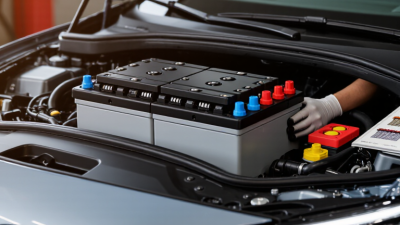
Lead-acid batteries remain important because many vehicles still rely on a 12-volt electrical system. The battery delivers a strong burst for engine starting and supports lights, locks, control modules, and other low-voltage equipment. In vehicles with start-stop systems, enhanced flooded batteries or absorbed glass mat designs can handle more frequent cycling than conventional flooded batteries. Not glamorous. But dependable starting depends on the right battery type and condition.
A 12-volt battery also serves as auxiliary power in many hybrid and electric vehicles, even when a high-voltage traction battery moves the vehicle. The exact setup varies by model, so replacement specifications matter. Check the required chemistry, capacity, and cold-cranking rating rather than choosing by size alone. Heat, short trips, and repeated electrical loads can shorten service life; a weak battery may show up as slow cranking or erratic electronic behavior. This is easy to overlook.
Recycling is another practical strength. The Battery Council International’s 2023 National Recycling Rate Study estimated a 99% U.S. recycling rate for lead batteries, based on 2021 data. That figure reflects an established collection and recycling system, not a guarantee that every battery is handled correctly. Lead-acid batteries are heavy, and their performance can decline gradually. A load test can reveal weakness before a cold morning makes it obvious.
Nickel-metal hydride (NiMH) batteries remain a practical choice for many hybrid-electric vehicles. They tolerate repeated charge-and-discharge cycles and accept energy from regenerative braking. That matters in stop-and-go traffic, where braking can return energy to the battery. The U.S. Department of Energy’s Alternative Fuels Data Center identifies NiMH as a battery chemistry used in hybrid vehicles. Its ruggedness and established manufacturing experience support dependable daily operation. Not immortal.
NiMH packs generally store less energy per kilogram than modern lithium-ion packs. That makes them less suited to vehicles needing long electric-only range. Yet a conventional hybrid does not depend on a large battery for extended driving. The International Energy Agency reported that electric-car battery demand exceeded 750 GWh in 2023, reflecting lithium-ion’s dominance in the broader market. That figure covers a different vehicle segment; it does not measure NiMH hybrid demand. Still, it shows why battery chemistry should be matched to the job, not judged by popularity alone. Heat, age, and repeated use can also reduce capacity, so durability is never guaranteed.
Tips: For a used hybrid, ask for a battery-health assessment and check for warning lights. Short trips and hot parking conditions can complicate battery wear; inspection matters more than assumptions.
In 2026, lithium-ion batteries remain central to electric vehicles, but their chemistry varies. Two common options are nickel manganese cobalt, or NMC, and lithium iron phosphate, or LFP. The IEA placed LFP at nearly 40% of EV batteries in 2023, a notable share for a chemistry once viewed as a narrower choice. That figure shows how quickly battery preferences can shift.
LFP avoids nickel and cobalt in its cathode, while NMC uses both. LFP cells often suit drivers who value durability and cost stability. NMC can offer higher energy density, which may help fit more range into a compact battery pack. Trade-offs are real. Cold weather can reduce usable range, and performance depends on pack design, charging habits, and vehicle controls—not chemistry alone.
The IEA’s estimate is useful, but it needs context: a market share does not reveal how every vehicle performs. Battery statistics can also vary by region and by whether researchers count capacity or battery units. A driver watching winter range fall on the dashboard may care less about market share than reliable heating and charging access. I’d treat the 2023 figure as a sign of LFP’s growing role, not a promise that one chemistry suits every trip.
Approximate share of global electric vehicle batteries by chemistry
The IEA reported that LFP batteries accounted for nearly 40% of the global EV battery market in 2023. The remaining share was mostly NMC, alongside other chemistries; percentages are rounded.
Source: IEA, Global EV Outlook 2024.
Sodium-ion batteries are gaining attention because sodium is abundant and can reduce dependence on certain constrained materials. Their energy density generally trails established lithium-ion chemistries, so equal driving range may require a larger, heavier pack. That trade-off matters. In a compact vehicle, extra mass can affect efficiency, while a shorter-range commuter may barely notice it. Sodium-ion cells may also suit cold-weather use and lower-cost vehicles, but performance depends on the specific cell and pack design. In 2026, automotive readiness remains uneven: early applications are more plausible in limited-range models than in vehicles expected to travel long distances between charges. Real-world durability data is still developing.
Solid-state batteries replace the conventional liquid electrolyte with a solid material, aiming for improved safety and higher energy density. The promise is substantial. Yet making thin, uniform layers at scale is difficult, and contact between layers can degrade during repeated charging. Some designs also need carefully managed pressure, complicating pack construction and servicing. Prototype results do not prove economical, high-volume production. By 2026, solid-state technology is best viewed as an emerging option, not a routine choice across new cars. Buyers and engineers should look for independently verified cycle-life, fast-charging, and temperature data. I would be cautious about treating a laboratory milestone as proof of dependable daily use.
| Battery Type | Typical Cell-Level Specific Energy | Key Strengths | Main Limitations | 2026 Readiness | Likely Automotive Uses |
|---|---|---|---|---|---|
| Lithium-ion NMC | Approximately 180–280 Wh/kg; varies by cell design. | High energy density supports longer driving range in a relatively compact, lightweight pack. | Uses materials that can be costly or supply-constrained; thermal management and battery controls are important. | Established technology used in mass-produced electric vehicles. | Longer-range passenger cars and vehicles where low weight and compact packaging are priorities. |
| Lithium-ion LFP | Approximately 120–180 Wh/kg; varies by cell design. | Good cycle life, strong thermal stability, and avoids nickel and cobalt in the cathode. | Typically lower cell-level energy density than NMC, which can mean a heavier or larger pack for a similar range. | Established and widely used in electric vehicles. | Mass-market passenger cars, commercial vehicles, and applications prioritizing cost and durability. |
| Sodium-ion | Approximately 100–160 Wh/kg for cells, depending on design and maturity. | Uses abundant sodium; may reduce reliance on lithium and can perform well in some low-temperature conditions. | Generally lower energy density than leading lithium-ion cells; supply chains and vehicle-scale experience are still developing. | Early commercial stage in 2026, with limited deployment compared with established lithium-ion chemistries. | Shorter-range vehicles, lower-cost models, and selected applications where cost or cold-weather performance matters more than maximum range. |
| Solid-state | No standard, broadly validated production-cell range. Higher values, often 300 Wh/kg or more, are development targets rather than a universal 2026 benchmark. | Could enable higher energy density and improved safety characteristics, depending on cell design. | Manufacturing scale-up, material interfaces, cycle life, fast charging, and cost remain important technical and commercial challenges. | Prototype and pilot-development stage; not yet a broadly established mass-market automotive battery type. | Potential future use in passenger and commercial vehicles if durability, production yield, and cost targets are met. |
| Lead-acid | Approximately 30–50 Wh/kg. | Low cost, well-established recycling systems, and reliable delivery of short bursts of power. | Low energy density and shorter cycle life than traction-focused lithium-ion batteries. | Mature and widely available, mainly as a low-voltage auxiliary battery. | Starting, lighting, and auxiliary electrical systems; generally not the main traction battery in modern long-range electric vehicles. |
| Note: Specific-energy figures are approximate cell-level ranges, not complete battery-pack figures. Actual performance varies with chemistry, cell format, design, temperature, and test method. Solid-state figures are not directly comparable where they refer to development targets rather than validated production cells. | |||||