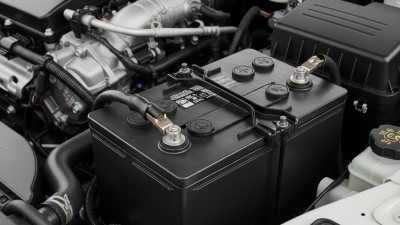
Choosing a reliable car battery supplier in China requires more than comparing prices on a marketplace. Buyers must examine factory capability, battery chemistry, testing procedures, warranty terms, and export experience. A supplier may display modern equipment, yet still lack stable quality control. Details matter.
Battery researcher Dr. Jeff Dahn has emphasized, “The battery is the heart of the electric vehicle.” This principle also applies to conventional automotive batteries. A dependable supplier should provide clear specifications, including cold-cranking amps, reserve capacity, cycle life, operating temperature, and charging requirements. Ask for recent test reports, production photos, sample results, and certification documents. Then compare them with the battery label and actual performance.
To find car battery manufacturers with real expertise, inspect their factory systems rather than trusting polished brochures. Check whether they control lead purity, plate formation, electrolyte filling, assembly, and final inspection. Review how they handle defective units and warranty claims. Speak with previous customers if possible. Trust takes testing.
The process is not perfect. A video audit cannot reveal every production weakness, and one successful sample proves little. This is where careful buyers often make mistakes. They focus on unit price and ignore failure rates, packaging damage, delivery consistency, or technical support. A practical evaluation should include samples, a small trial order, documented quality standards, and direct communication with engineers. The best supplier is not always the cheapest. It is the partner that delivers consistent batteries, honest records, and support after shipment.

When choosing a car battery supplier in China, define the electrical requirement before comparing prices. Start with voltage: 12 V systems are common in passenger vehicles, while many trucks and buses use 24 V systems. Never replace a 24 V system with one 12 V battery unless the design requires two batteries in series.
Capacity is measured in ampere-hours, or Ah. It indicates how much energy the battery can deliver over time. A higher Ah rating is not automatically better. The battery must fit the vehicle’s charging system, tray, terminals, and daily workload. Check physical dimensions and polarity carefully. Small errors can cause installation problems.
Cold cranking amps, or CCA, show starting performance at −18°C. Ask the supplier which testing standard was used. Values can differ between standards, so direct comparisons may mislead. Reserve capacity, or RC, measures how long a battery can support a 25 A load before reaching its test limit. This matters during alternator failure or heavy accessory use.
I have seen buyers focus only on Ah and overlook CCA. That was a costly mistake. Request test reports, production dates, warranty terms, and sample inspection records. A reliable supplier should explain variation between batches and provide traceable quality data. I would also verify terminal design, casing quality, leakage resistance, and performance after storage. Some specifications still need field testing. Supplier confidence is useful, but measured evidence is better.
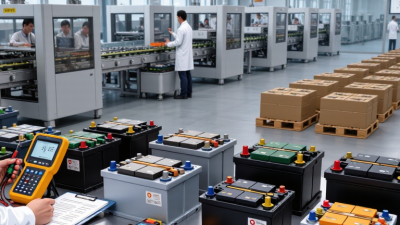
Finding a reliable car battery supplier in China requires more than comparing prices and catalog photos. Start by checking ISO 9001 certification for quality management. The certificate should match the factory’s legal name, address, and battery production scope. ISO’s 2022 Survey recorded more than 1.26 million ISO 9001 certificates worldwide, so certification alone does not prove excellent performance.
Look closer. Ask for recent audit reports, corrective-action records, and batch traceability examples. IATF 16949 is especially important for automotive supply chains. It emphasizes risk control, defect prevention, process capability, and customer-specific requirements. During a factory visit, review electrode coating controls, plate curing records, electrolyte filling checks, and final cold-cranking tests. Small gaps matter. A clean showroom means little if inspectors cannot trace one failed battery to its production shift.
Environmental control also deserves verification. ISO 14001 certification indicates a structured environmental management system, including waste, emissions, chemical handling, and emergency procedures. The ISO Survey 2022 reported over 529,000 ISO 14001 certificates globally, showing its broad adoption. However, documents can become outdated. Confirm certificate validity through the issuing certification body, not only through a supplier’s website. Request calibration records for testing equipment and observe how workers handle rejected batteries. One overlooked detail can expose weak management. Independent pre-shipment testing remains sensible, even when all three certificates appear valid.
| Verification Dimension | ISO 9001 | IATF 16949 | ISO 14001 | What the Buyer Should Verify |
|---|---|---|---|---|
| Primary purpose | Quality management system for consistent products and services | Automotive quality management system with additional customer and industry requirements | Environmental management system for controlling environmental impacts | Confirm that the certification matches the supplier’s actual production activities |
| Relevance to car batteries | Supports documented processes, inspection, corrective action, and traceability | Strong indicator of automotive production controls and customer-specific process discipline | Supports control of energy use, emissions, waste, chemicals, and environmental compliance | Check whether the certificate scope includes automotive battery manufacturing or related processes |
| Standard status | International management-system standard published by ISO | Automotive-sector standard developed by the International Automotive Task Force | International environmental management-system standard published by ISO | Request the current certificate and verify it through the issuing certification body |
| Certificate scope | Defines the locations, products, and processes covered by the quality system | Defines automotive sites, manufacturing activities, and applicable supporting functions | Defines the sites, activities, products, and environmental processes covered | Reject certificates that cover only an office, trading activity, or unrelated facility |
| Manufacturing-site check | The production site should be listed when manufacturing is included in the order | The relevant automotive manufacturing site must be included in the certificate scope | The environmental management system should cover the relevant production site | Match the certified address with the factory address shown in the supplier’s documents |
| Automotive customer expectations | Provides a general quality foundation but does not by itself confirm automotive compliance | Designed for organizations supplying automotive production and service parts | May support environmental requirements in customer and supply-chain assessments | Ask for customer-specific requirements, process approvals, and product testing records |
| Battery quality evidence | Quality objectives, inspection records, nonconformity control, and corrective-action records | Process risk analysis, control plans, measurement systems, traceability, and automotive quality tools | Environmental aspect evaluations, waste controls, emergency plans, and compliance evaluations | Request sample inspection reports for capacity, cold-cranking performance, leakage, dimensions, and labeling |
| Certificate validity review | Certification is commonly issued on a three-year cycle with periodic surveillance audits | Certification is generally maintained through a three-year cycle with IATF-specific surveillance requirements | Certification is commonly issued on a three-year cycle with periodic surveillance audits | Check certificate number, issue date, expiry date, status, scope, and surveillance information |
| Certification-body review | The certification body should be competent and appropriately accredited where applicable | The certification body should be recognized under the applicable IATF certification scheme | The certification body should be competent and appropriately accredited where applicable | Verify the certificate directly in the certification body’s online database or by written confirmation |
| Recommended buyer decision | Minimum quality-system evidence for many industrial suppliers | Preferred evidence when the battery will be supplied for automotive production or vehicle programs | Important for environmental-risk control, sustainability requirements, and regulated production activities | Use certification as a screening tool, then confirm technical capability, capacity, samples, audits, and delivery performance |
Finding the best car battery supplier in China requires more than comparing price or CCA numbers. I once treated a higher CCA label as proof of quality. That was a mistake. Test conditions matter.
IEC 60095 evaluates lead-acid starter batteries through defined capacity, cold-start, endurance, and safety tests. EN standards require careful checking because different parts cover different applications. SAE J537 commonly measures cold-cranking performance at -18°C, while JIS uses its own rating format. These results are not directly interchangeable. Ask suppliers for the exact standard edition, test temperature, discharge time, and final voltage. A clear test report should identify production date and laboratory conditions.
The International Energy Agency reported more than 14 million electric car sales worldwide in 2023. Yet many vehicles still use auxiliary 12-volt batteries, increasing the need for stable supply and accurate specifications. Request batch-level data for reserve capacity, electrolyte loss, cycle endurance, and charge acceptance. Compare at least three production batches, not one impressive sample. A 2024 market review from the International Lead Association also identifies automotive batteries as a major lead-acid application, supporting the importance of traceable materials and recycling controls. Do not accept vague claims such as “European quality.” Ask for IEC 60095, EN, JIS, or SAE J537 evidence that matches your target vehicle. Sometimes the paperwork looks perfect, but field performance remains uncertain. A controlled pilot order can expose that gap.
Finding the best car battery supplier in China requires more than comparing prices and product photos. Start by auditing samples through an independent ISO/IEC 17025 accredited laboratory. Test capacity, cold cranking performance, charging acceptance, leakage resistance, and cycle life. Ask for the complete test method, equipment details, and raw results. A polished certificate is not enough.
Request samples from the same production process used for your intended order. Record the sample date, cell type, factory line, and shipment condition. Then check whether each battery carries a clear batch code. Reliable suppliers should connect that code to materials, operators, inspection records, and final testing data. This creates batch-level traceability when a problem appears months later. I have seen suppliers provide strong samples but weaker production controls. That gap deserves attention.
Tips:
Use sealed sample packaging and photograph every label before testing. Compare laboratory results with the supplier’s internal report. Ask for retention samples from each batch. Review corrective-action records, even when they seem minor. No audit is perfect. A missed detail can matter. If the supplier resists independent testing or cannot explain inconsistent batch records, pause the purchase. Good documentation should be practical, readable, and available before payment, not reconstructed after a complaint.
Finding a reliable car battery supplier in China starts with transport compliance, not a low quotation. Request the UN 38.3 test summary for each lithium battery model and verify its cell configuration, test date, and manufacturer details. The test covers altitude simulation, thermal cycling, vibration, shock, and other transport risks. Also ask for the Safety Data Sheet, battery specification, and applicable packaging documents. The International Energy Agency reported that global battery demand reached about 750 GWh in 2023, increasing pressure on factories and logistics providers. More volume does not guarantee better documentation.
MOQ, lead time, and warranty data need written evidence. Ask whether the MOQ applies to one model, one voltage, or a mixed order. Confirm production time separately from shipping time. A practical benchmark is 30–60 days for customized automotive batteries, but tooling, testing, and seasonal capacity can change it. Get a production schedule with inspection points. It may sound basic. It prevents surprises.
Warranty terms should state capacity retention, cycle conditions, claim procedures, and exclusions. BloombergNEF reported that average lithium-ion battery pack prices fell to 139 dollars per kWh in 2023, yet cheaper pricing can hide shorter service support. Ask for sample warranty records, not only a percentage promise. The Global Battery Alliance also emphasizes traceability and responsible battery value chains. I would still challenge every polished document. Dates may be old, translations may be unclear, and one successful sample proves very little.