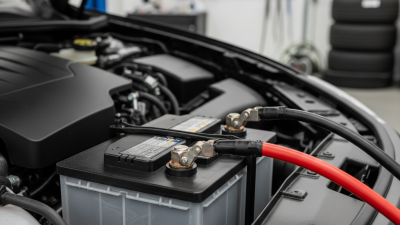
How to Find the Right Car Battery in 2026?

Choosing the right battery in 2026 starts with your vehicle, not a popular brand. To find car battery options that truly fit, check the owner’s manual or the manufacturer’s fitment guide. Battery group size, terminal layout, and hold-down position must match. A battery that looks close may still be unsafe or incompatible.

AAA guidance commonly places conventional car-battery life at about three to five years, though heat, cold, and driving habits affect that range. AAA automotive expert John Nielsen has warned that summer heat can damage batteries, while winter cold often reveals weakness. This is a practical warning, not a precise forecast for every car. The Battery Council International reports a U.S. lead-battery recycling rate above 99%, but recyclability does not make every replacement the right choice. Check the battery type your vehicle requires, especially if it has start-stop technology. Compare cold-cranking amps (CCA) with the manufacturer’s recommendation, not just the highest number on the shelf. Reserve capacity also matters when accessories draw power with the engine off. Look at the warranty and date code, too. A long warranty cannot compensate for a poor fit.

Small details matter. A loose clamp, reversed terminals, or the wrong battery chemistry can create problems. When uncertain, ask a qualified technician to confirm the specifications and test the charging system. Battery labels can be confusing, and fitment databases are not infallible. Verify before you buy.
How to Find the Right Car Battery in 2026?

Identify Your Vehicle’s Battery Requirements

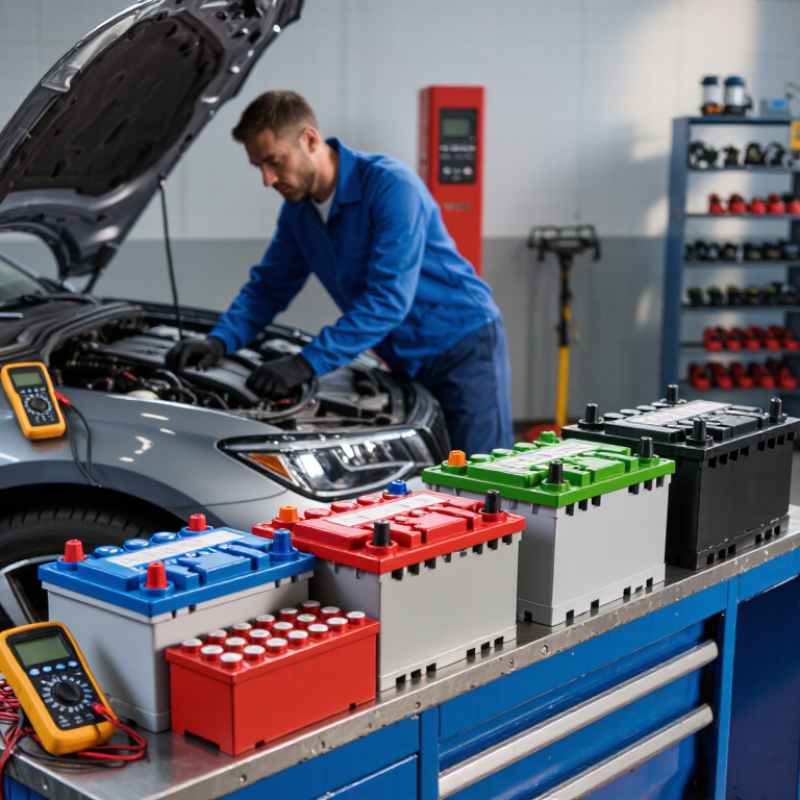
Identify your vehicle’s battery requirements before comparing prices. Check the owner’s manual or the label on the installed battery for group size, chemistry, minimum cold-cranking amps (CCA), and terminal layout. A battery can fit under the hood yet have the wrong terminal position. Fit matters. Battery Council International’s replacement data uses group sizes to describe dimensions and terminal placement, but the vehicle manufacturer’s specification should guide your choice.

CCA is not just a sales number. SAE J537 measures it at 0°F (−18°C): a 12-volt battery must supply its rated current for 30 seconds while remaining at or above 7.2 volts. Compare that rating with your manual’s requirement, especially if you face cold winters. Numbers matter.

For vehicles with stop-start systems, verify whether the original setup calls for an AGM or EFB battery; switching battery chemistry without checking can affect charging and service life. A mechanic can confirm fitment if the label is worn or the car has been modified. Even careful shoppers miss small differences. I would double-check the terminal orientation, too. It is easy to overlook.

Compare Battery Types and Essential Specifications

How to Find the Right Car Battery in 2026?

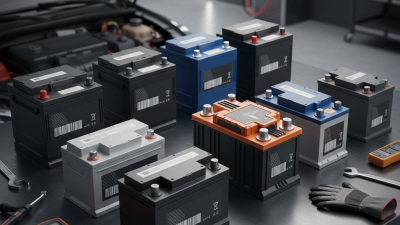
Compare battery types before comparing prices. Conventional flooded batteries suit many cars with basic electrical loads, while enhanced flooded batteries are designed for some start-stop systems. AGM batteries handle frequent cycling and heavier electrical demand, but they are not universal upgrades. Some newer vehicles use 12-volt lithium batteries; fitment and charging-system compatibility must be confirmed. A similar-looking battery can still be wrong.

Check the owner’s manual for battery group size, terminal layout, chemistry, and required ratings. Cold-cranking amps (CCA) indicate starting power in cold conditions; reserve capacity (RC) indicates how long a battery can supply power if the charging system fails. Match or exceed the vehicle maker’s specified ratings, rather than choosing by CCA alone. Battery Council International reports that more than 99% of lead batteries in the United States are recycled. That matters when replacing one: use an appropriate collection point. Small detail, big consequence.

Tips: Photograph the old battery’s label before shopping. Check that the positive and negative terminals sit on the correct sides. If your vehicle has start-stop technology, verify the required battery type and any registration procedure in its manual. A high rating cannot fix a poor fit.

Confirm Battery Size, Terminals, and Compatibility

Before buying a car battery, check the vehicle manual and the label on the current battery. Match the required group size, which describes its dimensions and terminal layout. A battery that looks close may not fit the tray or secure under the hold-down bracket. Measure twice. Also note the battery’s required capacity and cold-cranking rating; choosing a lower rating can cause unreliable starts in cold weather.

Terminal position matters. With the battery installed, identify which side has the positive post, then compare that layout with the replacement diagram. Check the post type and size too. Some vehicles use top posts, while others require side terminals. Do not guess. Reversed polarity can damage electrical components, so verify the markings before connecting anything.

Compatibility involves more than physical fit. Confirm whether the vehicle requires a specific battery technology, such as AGM or EFB, especially if it has start-stop features. The charging system may be designed for that type. It is easy to focus on a low price or familiar dimensions and miss this detail. That shortcut is worth questioning. If the manual and battery label conflict, or the specifications are unclear, ask a qualified technician to confirm the correct fit before purchase. A clear photo of the label and terminal arrangement can help.

How to Find the Right Car Battery in 2026: Confirm Size and Compatibility

The chart compares approximate battery case lengths; it does not confirm that a battery fits your vehicle. Before buying, check your owner’s manual or the existing battery for the required group size, case dimensions, terminal position and polarity, hold-down, and battery type. Dimensions can vary slightly by manufacturer.

Match Battery Performance to Climate and Driving Habits

Cold mornings expose weaknesses. A battery that starts a warm engine easily may struggle after a night below freezing. Check the vehicle manual for the required battery size and cold-cranking rating, then compare that rating with your local winter temperatures. More cranking power can help in severe cold, but it does not fix a poor fit or a failing charging system.

Heat matters too. Long, hot summers can speed battery wear, so a high reserve capacity alone is not a guarantee of longer life. Your driving pattern counts. Short trips add up. They may not give the alternator enough time to replace the energy used at startup, especially when lights, heating, or air conditioning are running. Frequent highway drives are less demanding in that respect.

For vehicles with stop-start systems, use the battery type specified in the manual; a conventional battery may not handle repeated starts well. This is not a perfect forecast: age, loose connections, and charging faults can change performance. I would not choose by climate alone. Consider your usual routes, parking conditions, and the vehicle’s requirements together.

Evaluate Battery Lifespan, Warranty, and Reliability

A car battery’s advertised lifespan is a range, not a promise. Many conventional 12-volt batteries last roughly three to five years, but heat, deep discharges, and frequent short trips can shorten that span. A car parked outdoors through hot summers may age faster than one driven regularly in mild weather. That matters. Check the battery’s manufacture date, not only its installation date, and request a charging-system test if the engine starts slowly.

Warranty terms can reveal how a battery is supported, but a long warranty alone does not prove reliability. Compare the free-replacement period with any later prorated coverage, and check what proof or testing a claim requires. Check the fine print. Keep the receipt and note the installation date; small paperwork details are easy to forget when a battery fails on a cold morning.

For reliability, match the battery’s size and cold-cranking rating to the vehicle maker’s specifications. Ask whether the battery type suits your driving pattern, especially if the car has start-stop technology or sits unused for days. Independent test results can help, though conditions may not match your own car. I would not choose by warranty length alone; a battery’s real service life is hard to predict precisely.

How to Find the Right Car Battery in 2026? — Evaluate Battery Lifespan, Warranty, and Reliability

Battery Type Typical Service Life Best Suited For Reliability Considerations Warranty Points to Check What to Verify Before Buying
Flooded lead-acid (standard) Often about 3–5 years, depending on climate, driving habits, and maintenance. Vehicles specified for a conventional flooded starting battery and regular driving conditions. Can be dependable when correctly sized and kept charged. Repeated deep discharge and extreme heat can shorten service life. Compare the free-replacement period with any prorated coverage; review exclusions and the proof-of-purchase requirement. Check the vehicle’s required battery group size, terminal layout, minimum cold-cranking amps (CCA), and charging-system requirements.
Enhanced flooded battery (EFB) Often about 3–5 years; actual life varies with vehicle use and operating conditions. Some vehicles with basic start-stop systems or higher cycling demands, when EFB is specified or approved. Designed for more charge-discharge cycling than a conventional flooded battery, but it is not a universal substitute for AGM. Check the coverage term, replacement conditions, and whether the warranty applies to the intended start-stop use. Confirm that the vehicle manufacturer permits EFB and that the battery matches the original specification.
Absorbent glass mat (AGM) Often about 3–5 years; climate, charging, and duty cycle can change the result. Many vehicles with start-stop, substantial electrical loads, or an AGM requirement from the vehicle maker. Sealed construction and stronger cycling capability can suit demanding applications. Correct charging control and fitment remain essential. Compare free-replacement coverage, any prorated period, and exclusions related to incorrect installation or charging-system faults. Use AGM where required or approved. Verify CCA, reserve capacity (RC), dimensions, terminals, and any battery-management-system registration procedure.
12-volt lithium (LiFePO₄) Highly product- and use-dependent; cycle-life claims are not directly comparable with years of vehicle service. Only vehicles and applications explicitly approved for the specific 12-volt lithium battery. Low weight and high cycle-life potential may be useful, but cold-weather charging limits, starting capability, and vehicle charging compatibility must be checked. Read the time and mileage limits, cycle or usage conditions, temperature exclusions, and whether the warranty covers automotive starting use. Confirm the chemistry is supported by the vehicle, the battery is rated for engine starting, and its low-temperature and charging protections meet local conditions.
Any replacement battery: key reliability checks Service life cannot be guaranteed by battery type alone. Every replacement decision. Short trips, long periods parked, high temperatures, repeated deep discharge, parasitic electrical drains, and a faulty alternator can reduce battery life. Check the complete written terms, claim process, installation requirements, and whether coverage is transferable. Match the vehicle’s specified chemistry and size; compare CCA and RC with the vehicle requirements; have the charging system and battery condition tested.

Note: Service-life figures are general estimates for 12-volt automotive batteries, not guarantees. Actual results vary by vehicle, climate, storage, maintenance, and usage. Follow the vehicle owner’s manual and battery manufacturer’s specifications; warranty terms differ by product and seller.