How to Choose a Good Car Battery from China?
Choosing a good car battery from China starts with fit, not price. The battery must match your vehicle’s voltage, dimensions, terminal layout, and required starting performance. A label can look convincing, yet a few millimeters may prevent a secure fit. Check the vehicle manual and confirm specifications with a qualified supplier before comparing offers.
China’s manufacturing scale makes careful verification especially important. The International Energy Agency reported that China held about 85% of global battery cell manufacturing capacity in 2023. That figure concerns lithium-ion cells, not every replacement starter battery. It shows industrial scale, but it does not prove that any individual product is dependable. S&P Global Mobility also reported that the average age of U.S. light vehicles reached 12.6 years in 2024. Older vehicles can place real demands on starting batteries, especially during cold starts or repeated short trips.
Look beyond broad claims. Ask for the battery’s chemistry, rated capacity, cold-cranking amps, production date, warranty terms, and test documentation. Compare the figures with your vehicle maker’s requirements, not merely with a competing label. Check how the seller handles shipping, storage, and warranty claims; a battery weakened by long storage may disappoint even when its specifications look right. That matters. I would not treat a polished certificate as a guarantee, either. Read the test scope and confirm that the model number matches the product offered. A good car battery is the one that fits, performs, and can be supported after purchase.
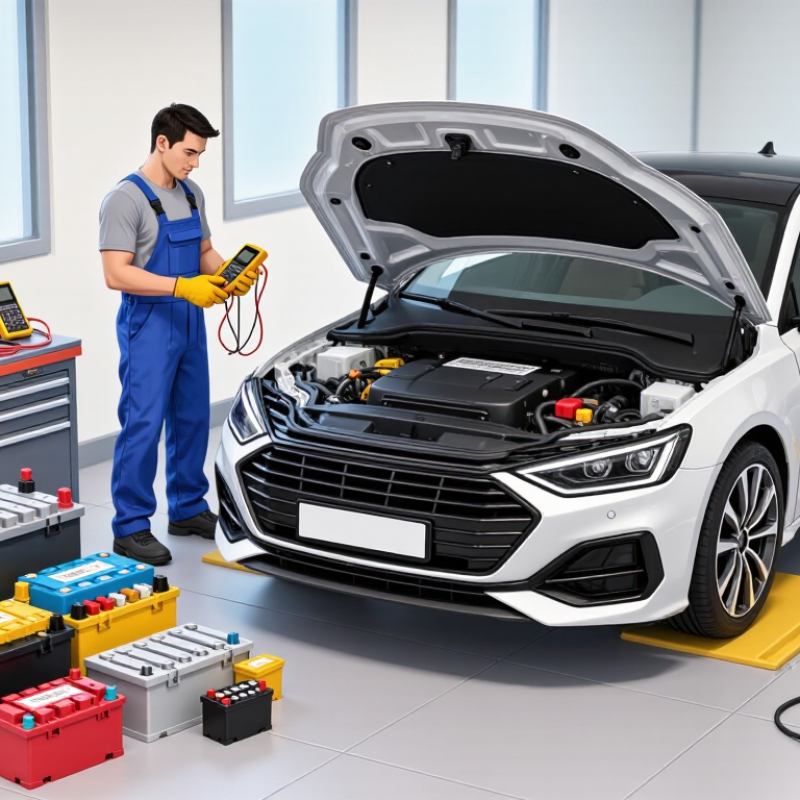
Match the Battery to the Vehicle: Confirm 12 V, Case Size, Polarity, and Terminals
How to Choose a Good Car Battery from China?
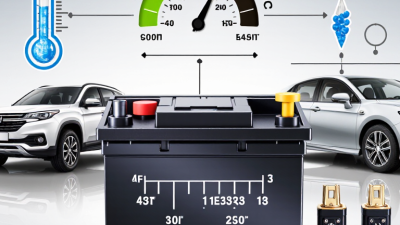
Match the battery to the vehicle before comparing price or cold-cranking ratings. Most passenger cars use a 12-volt battery, but voltage alone does not confirm fit. Check the owner’s manual or the label on the original battery for its group size, length, width, height, and hold-down style. The Battery Council International’s group-size system identifies common battery dimensions and terminal arrangements. A case that looks close may still sit too high or fail to clamp securely.
Small detail, big consequence.
Polarity matters just as much. Stand facing the battery as installed, then confirm whether the positive post is on the left or right; cable reach can be limited. Also match terminal type and position, since posts, threaded studs, and side terminals are not interchangeable.
AAA reports that at 0°F, a battery can lose about 60% of its strength while an engine may need roughly twice the starting power.
That is why a marginal fit or weak connection can become obvious in winter. Before ordering from China, ask the supplier for a dimensioned drawing and terminal diagram, then compare them with the vehicle’s specifications.
I once assumed two cases were identical from photos. They were not.
Compare Cold-Cranking Amps: SAE J537 Tests at −18°C for 30 Seconds
How to Choose a Good Car Battery from China?
Cold-cranking amps reveal how strongly a battery starts an engine in freezing weather. Under SAE J537, the battery is tested at −18°C for 30 seconds. A 12-volt battery should maintain at least 7.2 volts during this test. Ask the supplier for the complete test report, not only a printed CCA number. Check the test date, battery model, temperature, discharge current, and final voltage. Details matter.
A high CCA rating does not guarantee a suitable battery. Confirm the correct case size, terminal layout, reserve capacity, and charging requirements. Request production-batch traceability and recent inspection records. In my view, a reliable Chinese supplier should explain its test method clearly. Vague answers deserve caution. One common mistake is comparing batteries with different testing standards. The numbers may look impressive, but they are not equal. This standard is useful, though it cannot predict every winter condition.
Tips: Compare SAE CCA ratings only. Ask for an independent laboratory report when possible. Inspect the manufacturing date before shipment. Avoid batteries stored in heat for long periods. I would also request photos of the label, terminals, and packaging. Small checks prevent expensive surprises. Do not rely on CCA alone; installation quality and vehicle charging performance also affect starting reliability.
How to Choose a Good Car Battery from China? - Compare Cold-Cranking Amps: SAE J537 Tests at −18°C for 30 Seconds
| Illustrative CCA Rating Tier |
Rated Test Current |
SAE J537 Test Temperature |
Test Duration |
12 V Battery Pass Threshold |
What to Check When Comparing |
| Lower example rating |
400 A |
−18°C (0°F) |
30 seconds |
Terminal voltage remains at or above 7.2 V |
Confirm that the vehicle manufacturer’s minimum CCA requirement is met. |
| Mid-range example rating |
550 A |
−18°C (0°F) |
30 seconds |
Terminal voltage remains at or above 7.2 V |
Compare the stated CCA using the same test standard; ratings from different standards may not be directly equivalent. |
| Higher example rating |
700 A |
−18°C (0°F) |
30 seconds |
Terminal voltage remains at or above 7.2 V |
Check that the battery’s case size, terminal layout, and polarity match the vehicle. |
| Very high example rating |
850 A |
−18°C (0°F) |
30 seconds |
Terminal voltage remains at or above 7.2 V |
Ask for a traceable test report and verify that the quoted value is CCA, not a different starting-current rating. |
Note: The CCA tiers above are illustrative comparison points, not results for specific batteries. Under the SAE J537 cold-cranking test, a 12 V battery is cooled to −18°C and discharged at its rated CCA for 30 seconds; the voltage must remain at least 7.2 V. Always check the vehicle manual for the required battery specification. CCA alone does not indicate reserve capacity, battery life, or suitability for a particular vehicle.
Choose Battery Chemistry: Match Flooded, EFB, or AGM to Start-Stop Requirements
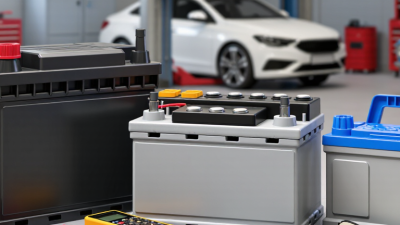
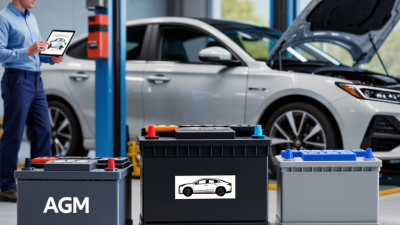
A good car battery starts with the vehicle’s start-stop system, not just its price or size. Conventional flooded batteries suit many cars without start-stop technology. They are practical for basic driving needs, but frequent engine restarts can wear them faster. Check the owner’s manual for the required battery type, capacity, and cold-cranking rating. A battery that fits the tray may still be the wrong match.
For standard start-stop systems, an EFB battery is often the specified choice. It handles repeated starts and accepts charge more effectively than a conventional flooded battery. AGM batteries suit some advanced start-stop systems and vehicles with heavier electrical loads, such as heated seats and frequent short trips. They generally cost more, so upgrading without checking vehicle requirements may not help. Small detail, big difference: confirm the original chemistry before buying a replacement from China, and compare the label specifications carefully.
Tips: Match the chemistry listed in the manual. Check terminal position, case dimensions, and manufacturing date. Ask for test data and warranty terms. Don’t guess from appearance alone. If the vehicle has a battery sensor, follow the maker’s replacement procedure; I’ve seen a correct-looking battery cause confusing warnings when setup was skipped.
Verify Chinese Suppliers: Check IEC 60095-1 Test Reports, Traceability, and Warranty
When choosing a car battery from China, confirm that IEC 60095-1 applies to its lead-acid starter-battery design. Request the complete test report, not a cropped certificate. Check that its model, rated capacity, cold-cranking performance, and sample code match the product offered. Verify the test date and laboratory, then confirm the lab’s relevant testing scope. Details matter. A report for a similar model is not evidence for your shipment.
Ask the supplier to link the tested sample to a production batch using dated records, serial or batch codes, and shipment documents. Battery Council International’s 2023 U.S. recycling-rate study estimated that about 99% of lead batteries are recycled, reflecting a well-established battery stream, not proof of any supplier’s quality. Keep that distinction clear. Before ordering, get the warranty in writing: coverage period, start date, claim evidence, remedy, and freight responsibility. Ask who handles a failed battery and how quickly a claim is assessed. A polished PDF can still leave gaps; I would check the batch trail twice. No shortcuts.
How to Choose a Good Car Battery from China?
Supplier verification framework based on evidence commonly required for automotive lead-acid starter batteries: IEC 60095-1 test documentation, batch traceability, and written warranty coverage.
The 0–5 scale is an internal purchasing score: 0 means no verifiable evidence and 5 means complete, consistent, and independently reviewable evidence. Confirm the applicable IEC 60095-1 edition, test conditions, serial or lot records, and warranty terms before approval.