Why Choose a Heavy Duty Car Battery for Your Vehicle Needs
When it comes to powering your vehicle, the choice of battery can significantly impact performance, efficiency, and longevity. A heavy duty car battery stands out as a top option for those who require reliability and durability in their automotive needs. This type of battery is specifically designed to withstand the rigors of demanding driving conditions, making it ideal for heavy-duty vehicles, frequent long-distance travelers, or anyone who relies heavily on their vehicle for daily activities.
The construction and technology behind a heavy duty car battery offer enhanced features that set it apart from standard batteries. With improved cold cranking amps (CCA) and reserve capacity, these batteries can provide higher starting power and sustain electrical demands for longer periods, especially during harsh weather conditions. Moreover, investing in a heavy duty car battery ensures that the vehicle remains functional and dependable, reducing the likelihood of unexpected breakdowns and maintenance costs.
In summary, choosing a heavy duty car battery is not just about ensuring that your vehicle starts; it's about enhancing overall performance and providing peace of mind for drivers who depend on their vehicles. With the right battery, you can enjoy increased reliability, extended lifespan, and superior power to navigate whatever challenges lie ahead on the road.
Understanding Heavy Duty Car Batteries: Key Features and Benefits
Heavy duty car batteries are designed to meet the demands of high-performance vehicles, heavy loads, and extreme weather conditions.
One of the key features of these batteries is their enhanced capacity and durability. Unlike standard batteries, heavy duty options are built with more robust materials and advanced technology to withstand the rigors of heavy usage. This means they can provide more energy for longer periods, making them ideal for vehicles that require frequent starts or operate in challenging environments.
In addition to their strength, heavy duty batteries offer significant benefits in terms of reliability and longevity. They are engineered to resist vibrations and thermal fluctuations, which can be detrimental to standard batteries. This added resilience translates into fewer instances of battery failure and lower maintenance costs over time.
Furthermore, heavy duty batteries typically have a higher cold cranking amp (CCA) rating, allowing them to deliver better performance in low-temperature conditions, ensuring that your vehicle starts reliably regardless of the weather. Overall, choosing a heavy duty battery can enhance the performance and reliability of your vehicle, making it a practical choice for those who demand more from their automotive power source.
The Importance of Battery Capacity and Cranking Amps in Heavy Duty Batteries
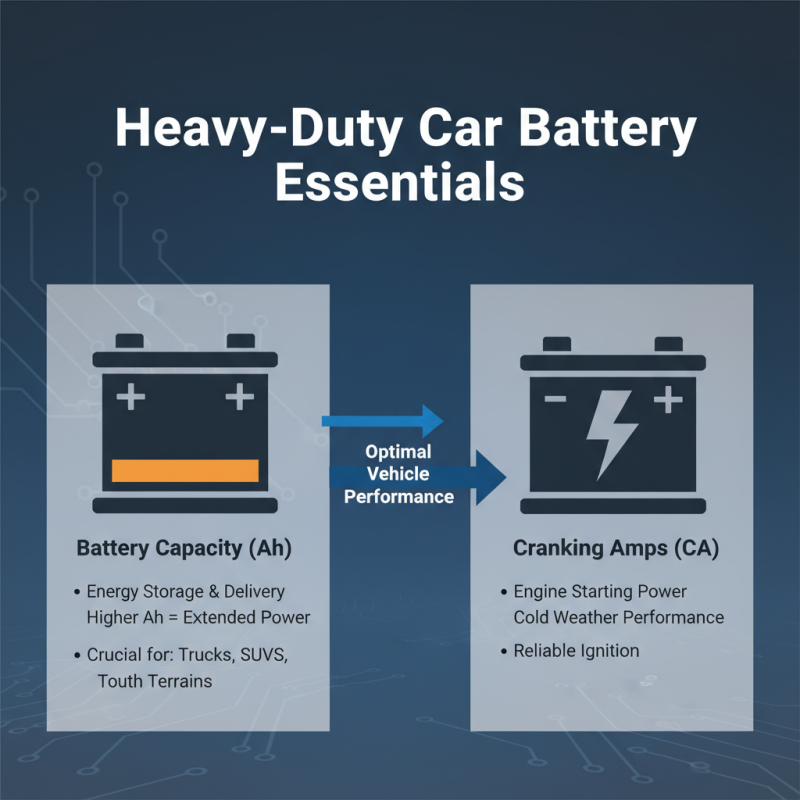
When selecting a heavy-duty car battery, understanding the importance of battery capacity and cranking amps is crucial for ensuring optimal vehicle performance. Battery capacity, measured in amp-hours (Ah), indicates how much energy a battery can store and deliver. For heavy-duty applications, a higher capacity means extended power delivery, essential for vehicles that rely on significant energy during operation, such as trucks and SUVs equipped for tough terrains.
Cranking amps (CA) are another vital specification to consider. This measurement reflects the battery's ability to start an engine in cold conditions, determining how well your vehicle can perform in adverse weather. Heavy-duty batteries typically offer a higher number of cranking amps, ensuring that your vehicle starts reliably, even in the coldest climates.
**Tips:** When choosing a heavy-duty battery, always verify the amp-hour rating and cranking amps based on your vehicle’s requirements. It's also advisable to examine the battery construction and materials for durability since these factors can significantly impact longevity and performance under heavy loads. Additionally, ensure that the battery fits securely within your vehicle to avoid any movement that could lead to premature wear or damage.
Comparing Heavy Duty Batteries to Standard Batteries for Vehicle Performance
When comparing heavy duty batteries to standard batteries, one of the most significant differences lies in their construction and performance capabilities. Heavy duty batteries are designed to withstand more demanding conditions, offering enhanced durability and longevity. This makes them a suitable choice for vehicles that operate in extreme temperatures, under heavy loads, or for applications that require frequent starts and stops. The thicker plates and higher capacity of heavy duty batteries enable them to deliver a higher cranking power, making them ideal for larger vehicles or those with additional electrical components.
In terms of vehicle performance, heavy duty batteries provide reliability that standard batteries may struggle to match. Vehicles that frequently engage in activities like towing, off-roading, or running auxiliary systems benefit greatly from the sustained power supplied by heavy duty batteries.
Furthermore, these batteries typically have a lower discharge rate, which means they can maintain their charge longer when the vehicle is not in use, reducing the risk of battery failure.
For those who rely heavily on their vehicles in demanding scenarios, choosing a heavy duty battery can significantly enhance overall performance and extend the battery's service life.
Factors to Consider When Choosing a Heavy Duty Battery for Your Vehicle
When selecting a heavy-duty car battery for your vehicle, several critical factors should be taken into account. Firstly, it's essential to assess the battery's cold cranking amps (CCA), especially if you live in an area with harsh winters. A battery with a higher CCA rating will provide better starting power in low temperatures, ensuring that your engine can start reliably even in challenging conditions.
Another important aspect is the battery’s reserve capacity (RC). This metric indicates how long the battery can run your vehicle's essential functions without the engine running. A higher reserve capacity is crucial for drivers who spend a lot of time idling or using energy-consuming accessories. To maintain optimal performance, check the state of the battery regularly and ensure that connections are clean and tight.
Tips: Before making a purchase, consider your vehicle's specific power needs. Look up the manufacturer’s recommendations for battery specifications and consider upgrading to a heavy-duty model if you frequently undertake demanding tasks like towing or off-roading. Additionally, evaluate the warranty offered—this can provide peace of mind and protection against potential defects in a heavy-duty battery.
Factors to Consider When Choosing a Heavy Duty Car Battery
Maintenance Tips for Ensuring Longevity of Heavy Duty Car Batteries
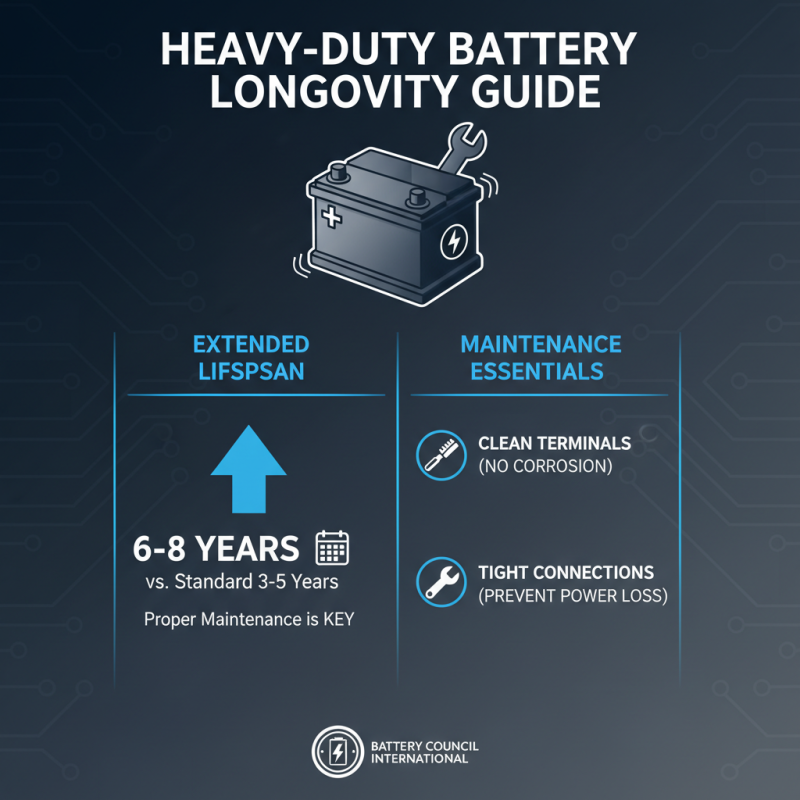
Maintaining a heavy-duty car battery is crucial to ensure it operates efficiently and lasts for many years. According to the Battery Council International, a properly maintained heavy-duty battery can provide reliable power and can last up to 6-8 years, significantly surpassing the lifespan of standard batteries, which typically last 3-5 years. To maximize longevity, regular inspections of battery terminals for corrosion and cleaning them when necessary is essential. Ensuring tight connections can also prevent loss of power and excessive wear.
Additionally, keeping the battery charged is critical; a report from the International Society of Automotive Engineers indicates that consistently allowing a battery to discharge below 50% can lead to sulfation, which shortens battery life. Using a smart charger, especially during long periods of inactivity, can help maintain optimal charge levels. Furthermore, safeguarding the battery from extreme temperature fluctuations is key, as high heat can accelerate battery fluid evaporation. Using battery blankets in cold climates can prevent freezing, while ensuring proper ventilation in hot climates can help maintain an ideal operating temperature. By following these maintenance tips, vehicle owners can ensure their heavy-duty batteries function efficiently throughout their lifespan.