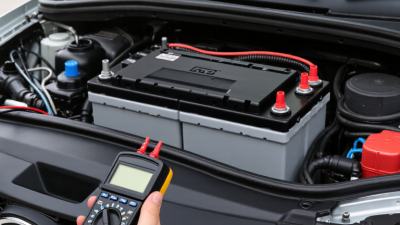
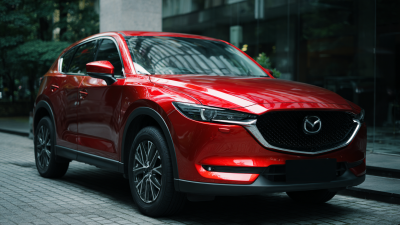
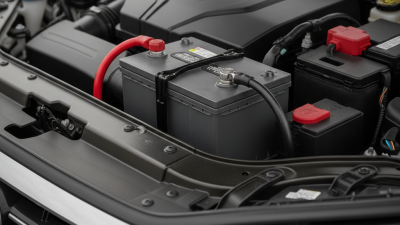
A dependable Mazda CX-5 battery should start the engine confidently, fit securely, and suit the vehicle’s electrical demands. Yet the right choice is not universal. Model year, engine, trim, and market can change the required size, terminal position, and starting capacity. A battery that fits can still disappoint.
This guide compares ten options for global buyers, including conventional and, where appropriate, start-stop-compatible designs. It considers practical details such as cold-cranking amps, reserve capacity, warranty coverage, and performance in hot or cold climates. These figures matter on a frosty morning, but so does the battery’s ability to handle repeated short trips and accessory use. Check the owner’s manual and the label on the existing battery before ordering. Confirm dimensions and terminal layout with a reputable supplier.
Small details count. A useful mazda cx 5 battery recommendation must match the specific vehicle, not just the model name. Battery technology and availability also vary by region, so a popular product elsewhere may not be the best local choice. The rankings offer a starting point, not a substitute for fitment verification or professional advice. Even careful comparisons have limits; battery life depends on driving habits, climate, charging-system condition, and maintenance. That part is easy to overlook.
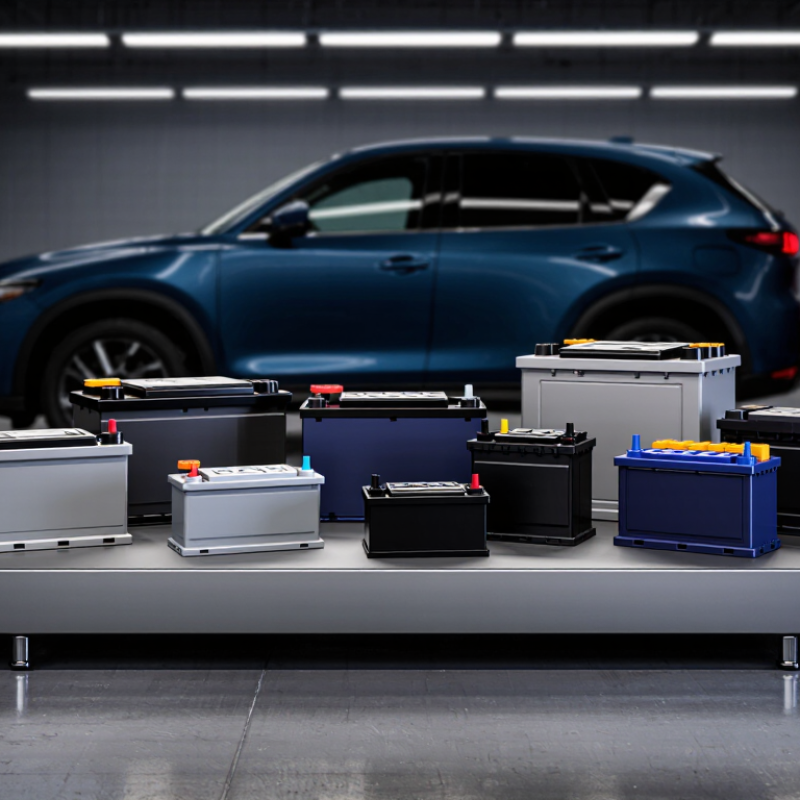
CX-5 battery fitment depends on model year, engine, and stop-start equipment; the year alone is not enough. Compare the existing battery’s case dimensions, terminal layout, hold-down points, and vent connection with the replacement. Battery Council International (BCI) group-size tables list Group 35 at about 9.1 × 6.9 × 8.9 inches. Treat that as a size reference, not a confirmed fit for every CX-5. A poorly secured case can shift on rough roads.
Check terminal polarity from the vehicle’s perspective, not just from a seller’s photograph. Match cold-cranking and reserve-capacity ratings to the owner’s manual or battery label. SAE International’s J537 standard covers storage-battery performance testing, but it does not confirm vehicle fitment. For stop-start versions, verify the required battery technology and any reset or registration procedure. Regional listings can omit important differences. Easy to miss, even after checking the year.
Tips: Photograph the old battery before removal. Record its group code and terminal positions, then compare them with the replacement’s specification sheet. If the label is unreadable, confirm fitment using the vehicle identification number and a reliable catalog.
These are battery specification profiles, not guaranteed vehicle fitments. Mazda CX-5 battery requirements can differ by model year, engine, market, and start-stop or energy-regeneration equipment. Confirm the required battery in the owner’s manual or by VIN before purchasing.
| Rank | Battery profile | Common size reference | Approx. case dimensions (L × W × H) | Typical specification range | Best suited to | Fitment checks |
|---|---|---|---|---|---|---|
| 1 | AGM, Group 35 | BCI 35 | Approx. 230 × 175 × 225 mm | About 550–700 CCA; capacity varies by model | Vehicles whose original specification calls for Group 35; frequent short trips or added electrical accessories | Check tray, hold-down, terminal position, and charging-system compatibility. |
| 2 | Flooded lead-acid, Group 35 | BCI 35 | Approx. 230 × 175 × 225 mm | About 500–650 CCA; capacity varies by model | A standard replacement where the vehicle specifies a conventional flooded battery | Do not substitute for an AGM or start-stop battery unless the vehicle specification permits it. |
| 3 | EFB, Group 35 | BCI 35 | Approx. 230 × 175 × 225 mm | About 500–650 CCA; capacity varies by model | Vehicles specified for an enhanced flooded battery and compatible with this case size | EFB is not automatically interchangeable with AGM; follow the vehicle’s required technology. |
| 4 | AGM, JIS Q-85 format | Q-85 (JIS) | Approx. 232 × 173 × 225 mm | Ratings vary; compare CCA and reserve capacity with the original battery | Some vehicles in markets using JIS battery codes, including certain start-stop applications | Verify JIS code, terminal layout, hold-down, and start-stop requirement. |
| 5 | EFB, JIS Q-85 format | Q-85 (JIS) | Approx. 232 × 173 × 225 mm | Ratings vary by construction and manufacturer | A replacement option when the original specification calls for a compatible EFB in Q-85 format | Confirm the original battery technology; dimensions alone do not establish compatibility. |
| 6 | AGM, DIN H5 / L2 | H5 / L2 | Approx. 242 × 175 × 190 mm | About 500–650 CCA; capacity varies by model | Vehicles with a confirmed H5/L2 tray and an AGM-compatible electrical system | Check battery height, vent connection, terminals, and clamp position. |
| 7 | AGM, DIN H6 / L3 | H6 / L3 | Approx. 278 × 175 × 190 mm | About 600–760 CCA; capacity varies by model | Vehicles with a verified H6/L3 battery compartment and matching original specification | Do not assume a longer case will fit; measure the tray and check the retaining bracket. |
| 8 | Flooded lead-acid, DIN H5 / L2 | H5 / L2 | Approx. 242 × 175 × 190 mm | About 450–600 CCA; capacity varies by model | Conventional applications that specifically list the H5/L2 case and flooded-battery technology | Use only when the vehicle maker permits a conventional battery for that application. |
| 9 | AGM, JIS S-95 format | S-95 (JIS) | Approx. 306 × 173 × 225 mm | Ratings vary; compare with the original CCA and reserve capacity | Only for applications whose manual or original battery explicitly specifies S-95 or an approved equivalent | This is a longer case format; confirm available space and terminal orientation before ordering. |
| 10 | Flooded lead-acid, Group 26R | BCI 26R | Approx. 208 × 173 × 197 mm | About 400–550 CCA; capacity varies by model | A market-specific replacement only where the vehicle’s battery label or catalog confirms Group 26R | Do not select by dimensions alone; confirm polarity, terminal type, and minimum starting rating. |
Before buying: Match the original battery’s group or JIS/DIN code, length, width, height, terminal type and polarity, CCA, battery chemistry, venting, and hold-down. Check the model year and market specification using the vehicle manual or VIN. Dimensions are approximate standard case dimensions and may not include terminal height.