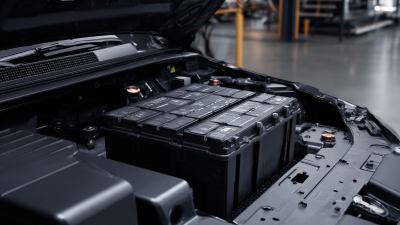
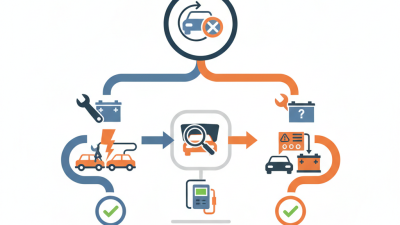
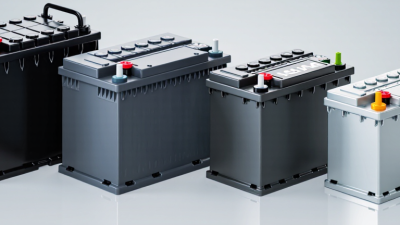
A battery charger for car battery is more than a box with cables. It is a controlled device that restores electrical energy to a vehicle’s battery. The charger must match the battery’s voltage, chemistry, capacity, and condition. A wrong setting can cause overheating, reduced battery life, or failed starting performance. Small details matter. A damaged cable matters too.
Isidor Buchmann, founder of Cadex Electronics and Battery University, explains, “A battery charger is not a power supply.” This distinction helps drivers choose equipment more carefully. A charger changes its output during charging. It may begin with a higher current, then reduce power as the battery approaches full capacity. Smart models can also detect voltage, temperature, and charging status. That sounds simple. It is not always simple.
This guide explains how a battery charger for car battery works, which charger types suit common vehicles, and how to use one responsibly. It also considers flooded lead-acid, AGM, and other battery designs. A workshop technician may inspect terminals before connecting the charger. You should do the same. Clean, tight terminals improve contact. Ventilation remains important, especially during traditional lead-acid charging. Protective eyewear is sensible.
Some advice online feels too confident. Battery age, weather, and vehicle electronics can change the result. A charger may restore a weak battery, but it cannot reliably repair internal damage. That limitation deserves attention. The best choice combines correct specifications, careful observation, and realistic expectations.
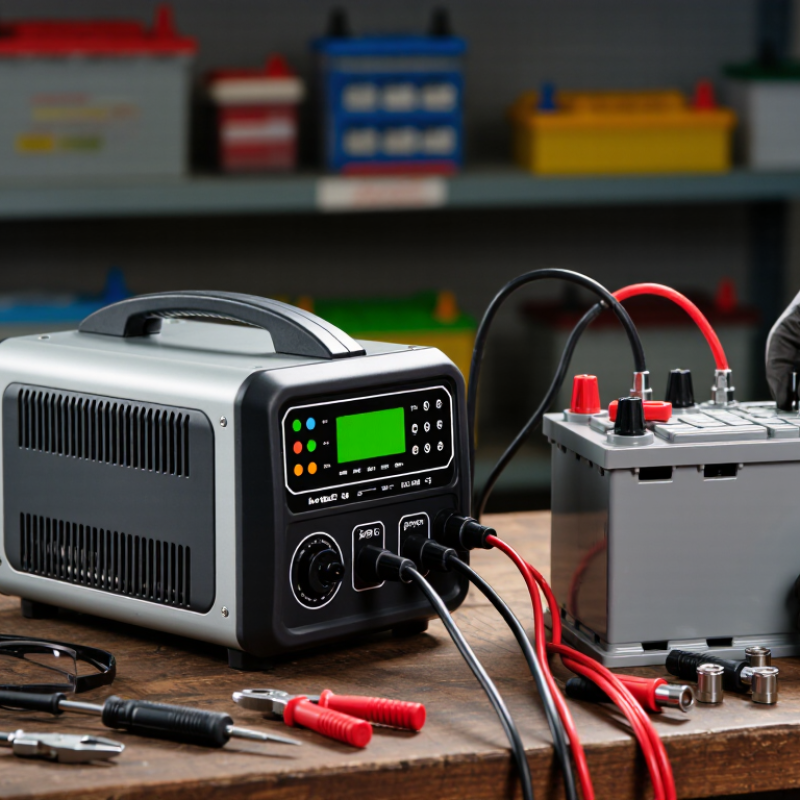
What Is a Car Battery Charger?
A car battery charger is a device that restores electrical energy to a rechargeable vehicle battery. It connects to the battery terminals and sends controlled current through the battery. Unlike a jump starter, it usually needs time to recharge a weak or discharged battery.
Most chargers offer several operating modes. A low-current setting may recharge a battery slowly overnight. A higher-current setting works faster but requires closer attention. Smart chargers can monitor voltage and reduce current when the battery approaches full charge. This helps limit overcharging, though it does not remove every risk.
Check the battery type and voltage before connecting a charger. Most passenger vehicles use a 12-volt system, but the charger must still match the battery’s design. Turn off the vehicle, keep the area ventilated, and connect the positive clamp before the negative clamp. Disconnect power before removing the clamps.
Small details matter.
A common mistake is choosing a charger only by charging speed. Fast charging may create excess heat, especially with an old or damaged battery. Inspect the case for swelling, cracks, or leaks, and stop if you notice unusual heat or smell. It is also easy to assume a dead battery only needs charging. Sometimes, repeated discharge points to a failing battery, a poor connection, or an electrical drain. Checking those causes can prevent another disappointing start.

What Is a Battery Charger for Car Battery?
How Does a Car Battery Charger Work?
A car battery charger restores energy to a discharged battery through controlled electrical current. It connects to the battery terminals, then changes household alternating current into usable direct current. An internal controller adjusts voltage and current during charging. This control helps prevent overheating, excessive gassing, and unnecessary battery stress.
Many chargers use several charging stages. The first stage supplies stronger current to recover the battery quickly. The next stage reduces current as the battery voltage rises. A final maintenance stage provides small pulses or a steady low current. This helps keep a fully charged battery ready without continuous overcharging. Charging time depends on battery capacity, condition, temperature, and charger output.
Tips: Turn off the vehicle before connecting the charger. Check the battery label for its voltage and type. Connect the red clamp to the positive terminal, then attach the black clamp to a suitable negative point. Wear eye protection and charge in a ventilated area. Never charge a cracked, leaking, or visibly swollen battery. I once assumed a slow charger meant a faulty unit, but cold temperatures can also reduce charging speed. That detail is easy to overlook. Check the charger occasionally, because automatic settings are helpful but not infallible.
A car battery charger converts AC electricity into controlled DC power. It typically charges a 12-volt lead-acid battery in stages: the bulk stage supplies higher current, the absorption stage holds the voltage while current decreases, and the float stage maintains the battery at a safer lower voltage.
Representative charging profile: Values are typical for a 12-volt lead-acid car battery and can vary according to battery capacity, temperature, and charger settings.
A car battery charger restores stored electrical energy through controlled current. Its design must match the battery’s voltage and chemistry. Most petrol and diesel cars still use 12-volt lead-acid batteries, including flooded, AGM, and gel designs. The U.S. Environmental Protection Agency reports that about 99% of lead-acid batteries are recycled, showing their continuing importance in vehicle ownership.
The main charger types differ by charging control. Trickle chargers deliver a small, steady current. They suit vehicles parked for weeks, but poor regulation can cause overcharging. Float maintainers are safer for long storage because they reduce output after reaching full charge. Conventional chargers usually provide fixed charging rates. They are simple and affordable, yet users must monitor charging time and temperature. Smart chargers use multi-stage charging. They test battery condition, adjust current, and stop or maintain power automatically. This is usually the most practical option for daily drivers.
Portable jump starters are different. They mainly provide short bursts for engine starting, not complete battery recovery. The International Energy Agency’s Global EV Outlook 2024 projected more than 17 million electric-car sales in 2024. That growth increases attention on auxiliary 12-volt systems, which can still need separate charging. Lithium-compatible chargers require extra care. Lead-acid settings may damage lithium batteries. Labels can mislead. Check voltage, chemistry, amp-hour capacity, and manufacturer guidance before connecting any charger. A charger that works well in one garage may be unsuitable in another.
A car battery charger restores energy when driving cannot replenish a weak battery. Choosing correctly matters more than choosing the fastest model. ADAC’s 2024 Breakdown Statistics reported starter-battery problems in 44.1% of roadside failures. That figure shows why a reliable charger deserves attention.
Check the battery label before buying. Most passenger cars use a 12-volt lead-acid battery, but flooded, AGM, and EFB batteries need different charging profiles. Select a smart charger that identifies voltage and reduces current after charging. A 4–10 amp setting suits many household batteries. Larger batteries may need more current, but speed is not always safer. A charger should include reverse-polarity protection, overcharge control, and a maintenance mode. IEC 60335-2-29 covers safety requirements for household battery chargers. It is a useful reference, not decorative paperwork. I would not choose by amperage alone. That shortcut can shorten battery life.
Tips: Match the charger to the battery type and capacity. Confirm the vehicle’s manual first. Clean corrosion from the terminals, then connect carefully. Charge in a ventilated area, away from sparks and moisture. Do not use a standard lead-acid setting on a lithium battery. Stop if the case becomes hot, swollen, or cracked. A cheap charger may appear convenient, but missing protection features can create expensive trouble. Even a smart charger cannot repair a damaged battery.
A car battery charger converts household electricity into controlled current for a vehicle’s rechargeable battery. It can restore a weak battery, but it cannot safely repair a cracked, leaking, frozen, or swollen one. Before charging, check the battery label and charger settings. Match the voltage carefully. Remove jewelry, wear eye protection, and work in a dry, well-ventilated area.
Ventilation matters. According to OSHA, hydrogen can ignite between 4% and 75% concentration in air. Keep cigarettes, flames, and sparks far away. Turn the charger off before attaching the clamps. Connect the positive clamp to the positive terminal, then connect the negative clamp to the recommended ground point or negative terminal. Do not let the clamps touch. I still recheck polarity twice; one rushed connection can damage equipment or cause arcing.
Charge on a stable, nonflammable surface, and follow the charger’s instructions for timing and current. Never cover the battery while charging. The National Fire Protection Association reported an annual average of 46,700 home structure fires involving electrical distribution and lighting equipment from 2015 to 2019, showing why electrical charging deserves caution. Stop immediately if the battery becomes unusually hot, swells, smells strongly, or makes bubbling sounds. Some modern chargers stop automatically, but I would not treat that feature as permission to leave a questionable battery unattended. After charging, switch off the power before removing the clamps, then inspect the battery and cables for heat or damage.
| Data Dimension | Typical Data or Range | What It Means | Safe-Use Guidance |
|---|---|---|---|
| Charger purpose | Restores electrical energy to a rechargeable 12-volt automotive battery | A charger converts household AC electricity into controlled DC power for the battery | Use a charger designed for the battery’s chemistry and voltage |
| Battery nominal voltage | 12 volts | A fully charged six-cell lead-acid battery is approximately 12.6–12.8 volts at rest | Do not use a 24-volt charging setting on a standard 12-volt car battery |
| Common battery capacity | Approximately 40–100 ampere-hours (Ah) for many passenger vehicles | Capacity indicates how much electrical charge the battery can store | Check the battery label or vehicle manual before selecting the charging current |
| Recommended charging current | About 5–10% of the battery’s Ah rating for conventional lead-acid batteries | A 60 Ah battery commonly charges at roughly 3–6 amperes for a gentler charge | Use the battery manufacturer’s instructions when available; lower current generally produces less heat |
| Low-current maintenance charging | Approximately 0.5–2 amperes, depending on battery size and charger design | Maintains charge during extended storage rather than quickly recharging a deeply discharged battery | Use an automatic maintainer with overcharge protection |
| Bulk charging stage | The charger supplies most of the selected current until the battery approaches its target voltage | This stage replaces most of the battery’s missing charge | Stop charging if the battery becomes excessively hot, swells, leaks, or produces an unusual odor |
| Absorption charging stage | Approximately 14.2–14.7 volts at about 20–25°C for many flooded lead-acid batteries | Voltage is held near the charging limit while current gradually decreases | Charging voltage varies by battery type and temperature; follow the specified setting |
| Float or maintenance voltage | Approximately 13.2–13.8 volts at about 20–25°C for many 12-volt lead-acid batteries | Keeps a fully charged battery ready without continuously applying a high charging voltage | Use a charger that automatically switches to float or standby mode |
| Approximate charging time | Commonly 8–16 hours for a moderately discharged 60 Ah battery at 4–6 amperes | Actual time depends on battery condition, depth of discharge, charger output, and charging efficiency | Do not rely only on a time estimate; use the charger’s status indicator or measure resting voltage after charging |
| Resting voltage: fully charged | Approximately 12.6–12.8 volts after several hours without charging or load | Usually indicates a healthy, fully charged 12-volt lead-acid battery | A voltage reading immediately after charging may be temporarily higher due to surface charge |
| Resting voltage: partially discharged | Approximately 12.2–12.4 volts | Often indicates a significant loss of charge, although voltage is affected by temperature and battery condition | Recharge promptly to reduce the risk of sulfation in lead-acid batteries |
| Ventilation requirement | Charge in a well-ventilated area | Lead-acid batteries can release hydrogen gas, especially during overcharging | Keep away from cigarettes, sparks, flames, and other ignition sources |
| Connection sequence | Charger switched off before connecting; positive clamp to positive terminal first | Correct sequencing helps reduce arcing and accidental short circuits | Connect the negative clamp to the designated vehicle ground point when instructed by the vehicle manual |
| Disconnection sequence | Switch the charger off and unplug it before removing the clamps | Disconnecting without power reduces the chance of sparks | Remove the negative clamp first, then the positive clamp, unless the vehicle manual specifies another procedure |
| Battery condition check | Inspect for cracks, leakage, bulging, damaged terminals, or frozen electrolyte | Physical damage or freezing can make charging unsafe | Do not charge a damaged or frozen battery; seek qualified service or replace it |
| Personal protection | Wear eye protection and avoid loose clothing or metal jewelry | Battery acid can cause chemical burns, and metal objects can create short circuits | Keep tools and conductive objects away from both battery terminals |
| Battery compatibility | Flooded, AGM, and gel batteries may require different charging profiles | Using the wrong profile can cause undercharging, overcharging, or battery damage | Select the correct mode and voltage according to the battery label or vehicle manual |
| Automatic charger benefit | Automatically adjusts, reduces, or stops charging when the battery reaches the target condition | Helps limit overcharging compared with an uncontrolled constant-output charger | Even with automatic charging, inspect the battery and follow the charger instructions |