2026 Top Car Battery Types You Need to Know?
As the automotive industry continues to evolve, understanding car battery types becomes crucial. In 2026, advancements in technology will shape vehicle performance. According to a recent industry report, the global car battery market is projected to reach $100 billion. Different battery types cater to various needs, influencing electric vehicle adoption.
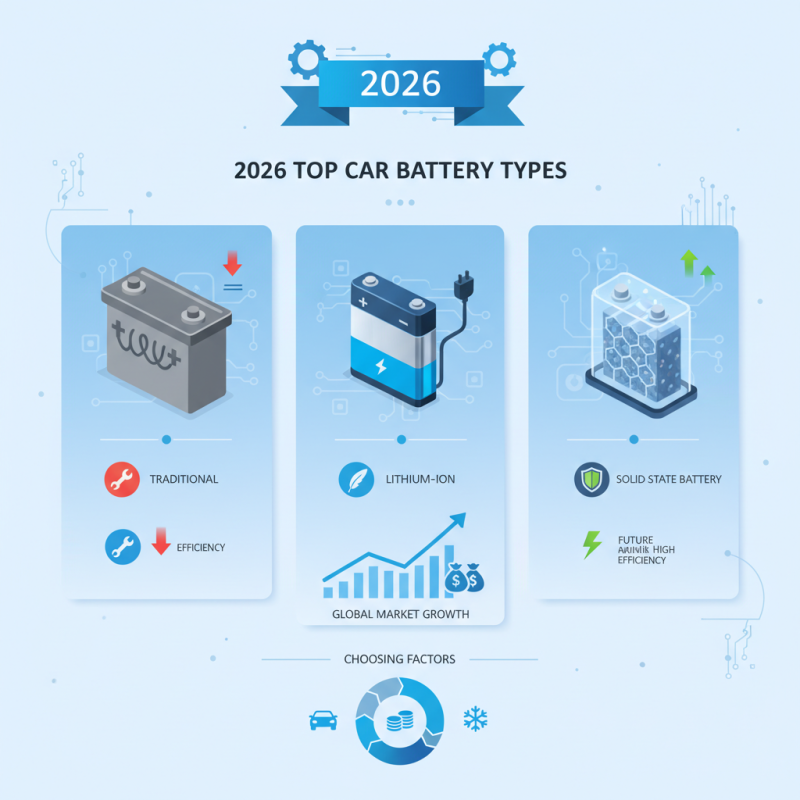
Lead-acid, lithium-ion, and solid-state batteries dominate the market. Lead-acid batteries are traditional but inefficient for electric vehicles. Lithium-ion batteries are popular due to their lightweight and energy density. Meanwhile, solid-state batteries promise higher safety and efficiency, yet are still in development.
Choosing the right car battery requires careful consideration. Preferences can change based on application, cost, and climate. Consumers often overlook these details. The dynamic battery landscape demands attention. Awareness of each type's pros and cons is essential for intelligent choices. Recognizing the need for improvement in battery technology can lead to better decisions for the future.
Overview of Car Battery Types Available in 2026
In 2026, diverse car battery types are poised to redefine automotive energy storage.
Lithium-ion batteries remain the most common in electric vehicles.
These batteries offer high energy density, making them ideal for long-range driving.
Their lightweight structure allows for improved efficiency.
However, their production involves significant environmental concerns.
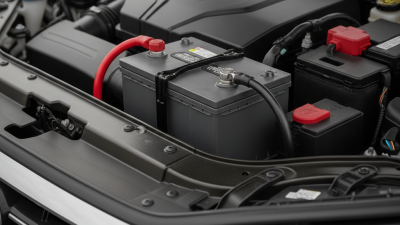
Lead-acid batteries continue to serve traditional combustion engine vehicles.
They are affordable and easy to recycle. Yet, they have limitations in capacity and lifespan.
Many are exploring alternatives that could replace these older systems.
Consider that the heavy weight can reduce vehicle performance, especially in hybrid models.
Tips:
When choosing a car battery, consider the weight and size.
Understanding your vehicle's specific needs is crucial.
Look for batteries with good warranties. This reflects their reliability.
Researching battery recycling options is also beneficial. It can help mitigate environmental impacts.
Characteristics of Lead-Acid Batteries and Their Applications
Lead-acid batteries remain a prevalent choice in various industries. They are known for their robust structure and reliability. In 2021, they captured over 30% of the global battery market. This figure highlights their importance in sectors like automotive and renewable energy.
Lead-acid batteries are characterized by their ability to provide high surge currents. They excel during short energy demands, making them ideal for starting engines. However, these batteries also have shortcomings. Their weight can be a significant disadvantage, often leading to inefficiencies in transport and installation.
In terms of applications, these batteries serve well in backup power systems. They are frequently used in uninterruptible power supplies (UPS) due to their cost-effectiveness. A report from IHS Markit noted that UPS systems utilizing lead-acid batteries are expected to grow steadily, but lifespan concerns persist. Typically, these batteries have a lifespan of 3 to 5 years, leading to frequent replacements. This turnover creates both financial and environmental challenges that demand attention.
Exploring Lithium-Ion Batteries for Modern Vehicles
Lithium-ion batteries have transformed modern vehicles. These batteries are lighter and more efficient than traditional lead-acid alternatives. A recent report from Battery University states that lithium-ion batteries can deliver up to 300 watt-hours per kilogram. This energy density allows cars to travel longer distances on a single charge.
However, there are challenges. The production of lithium-ion batteries can lead to significant environmental concerns. Mining for lithium requires extensive water use and can affect local ecosystems. According to a study by the International Energy Agency, the demand for lithium could increase sixfold by 2030. This raises questions about sustainability and resource management in the industry.
Moreover, lithium-ion batteries have a limited lifespan. They typically last between 5 to 15 years, depending on usage. Many consumers may not be aware of these limitations. After their useful life, proper recycling is crucial but not always accessible. Finding a balance between performance and sustainability is essential for the automotive industry moving forward.
Advantages and Disadvantages of Nickel-Metal Hydride Batteries
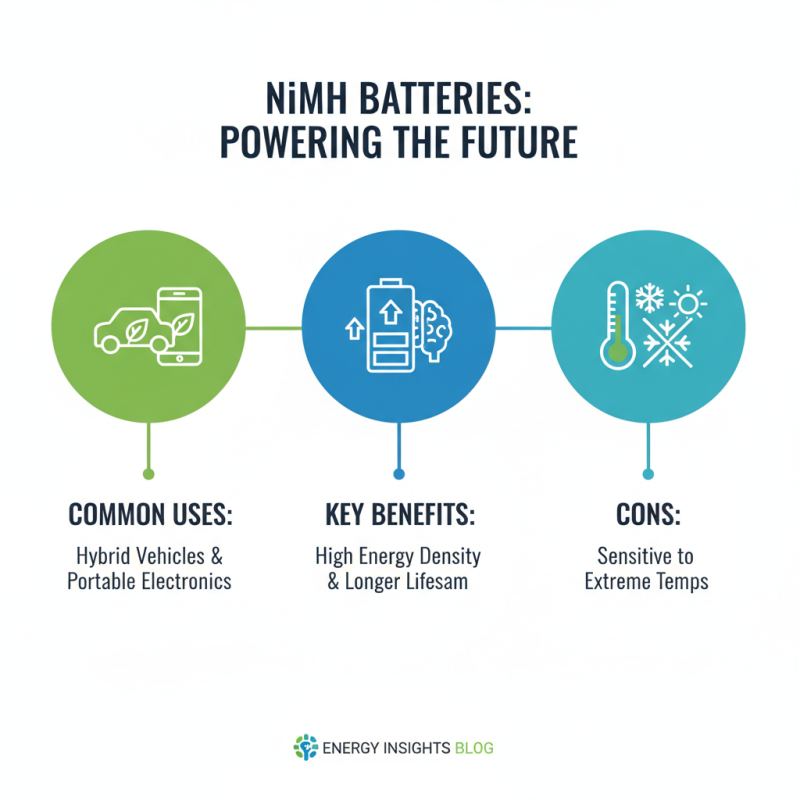
Nickel-metal hydride (NiMH) batteries are popular for various applications. They are often found in hybrid vehicles and portable electronics. One significant advantage is their high energy density. This means they can store more energy in a smaller space. They also have a decent lifespan, often outlasting traditional lead-acid batteries. However, the performance can diminish in extreme temperatures.
The environmental impact of NiMH batteries can be positive. They usually contain fewer toxic materials than other types. But recycling options remain limited. This creates challenges at the end of their lifecycle. Heavy metals are present in some compositions, raising concerns. Additionally, they can slowly self-discharge when not in use. This can be frustrating for users who need reliable power storage.
Another point to consider is cost. They can be more expensive than basic battery options. This might not be ideal for budget-conscious consumers. While they offer benefits, the trade-offs need to be weighed carefully. Users must consider their specific needs when choosing battery types. These factors highlight the complexity surrounding NiMH batteries in the modern market.
Future Trends in Car Battery Technologies for Electric Vehicles
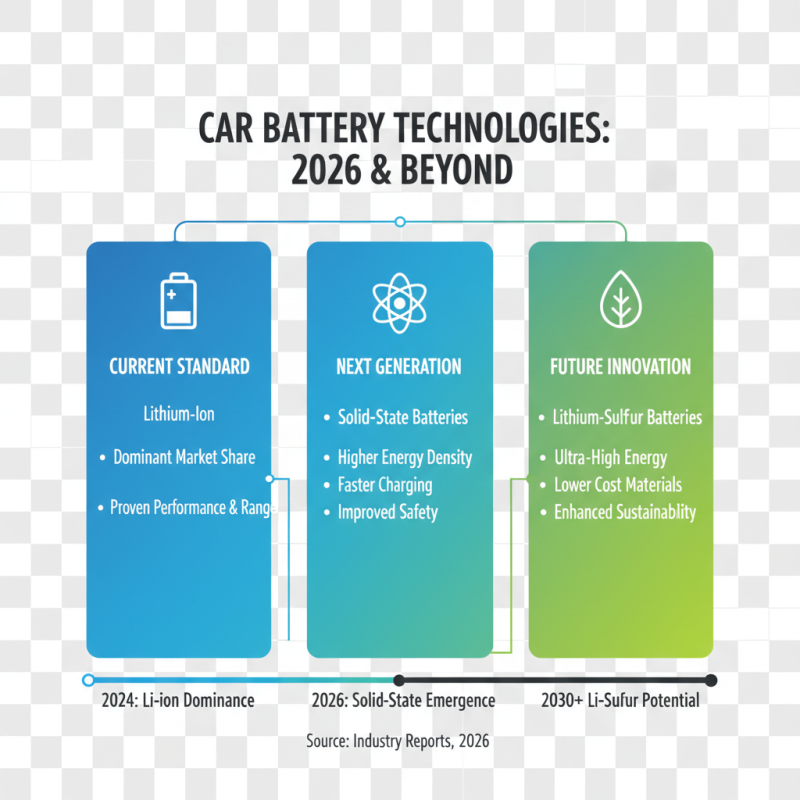
The automotive industry is evolving rapidly, especially with electric vehicles (EVs). In 2026, understanding car battery technologies is crucial. As electric cars gain popularity, innovative battery types will redefine performance and sustainability. According to industry reports, lithium-ion batteries currently dominate. However, solid-state and lithium-sulfur batteries are on the horizon.
These emerging technologies promise greater energy density and faster charging. Solid-state batteries offer improved safety features. Meanwhile, lithium-sulfur batteries could dramatically reduce costs. For instance, lithium-sulfur batteries can provide nearly twice the energy storage compared to lithium-ion, according to recent studies. However, there are challenges. These innovative batteries are still in development, facing hurdles like scalability and production costs.
**Tip:** Keep an eye on battery recycling programs. As new types emerge, efficient recycling will be vital to minimize waste.
Consumer awareness is rising. Many shoppers seek eco-friendly options. They expect manufacturers to prioritize sustainable materials in battery production. The pressure to innovate sustainably is real, and companies must adapt. Yet the transition isn't flawless. Significant research and development are still needed.
**Tip:** Stay informed about new technologies. Understanding these trends can aid in making smarter purchasing decisions in the future.