Top 10 Factors to Consider When Choosing an Automotive Battery
When it comes to vehicles, the significance of a reliable automotive battery cannot be overstated. The automotive battery serves as the heart of your vehicle's electrical system, powering everything from engine ignition to entertainment systems. Selecting the right battery can make a substantial difference in both performance and longevity. Given the variety of options available on the market, understanding the critical factors that contribute to a battery's effectiveness is essential for every vehicle owner.
In this guide, we will explore the top ten factors to consider when choosing an automotive battery. From understanding battery types and sizes to evaluating cold cranking amps and reserve capacity, each element plays a crucial role in the overall functionality of your vehicle. Whether you drive a compact car, a heavy-duty truck, or an electric vehicle, making an informed choice about your automotive battery ensures that you achieve optimal performance and reliability. Join us as we delve into the key considerations that will help you make the best decision for your automotive needs.

Key Specifications of Automotive Batteries to Look For
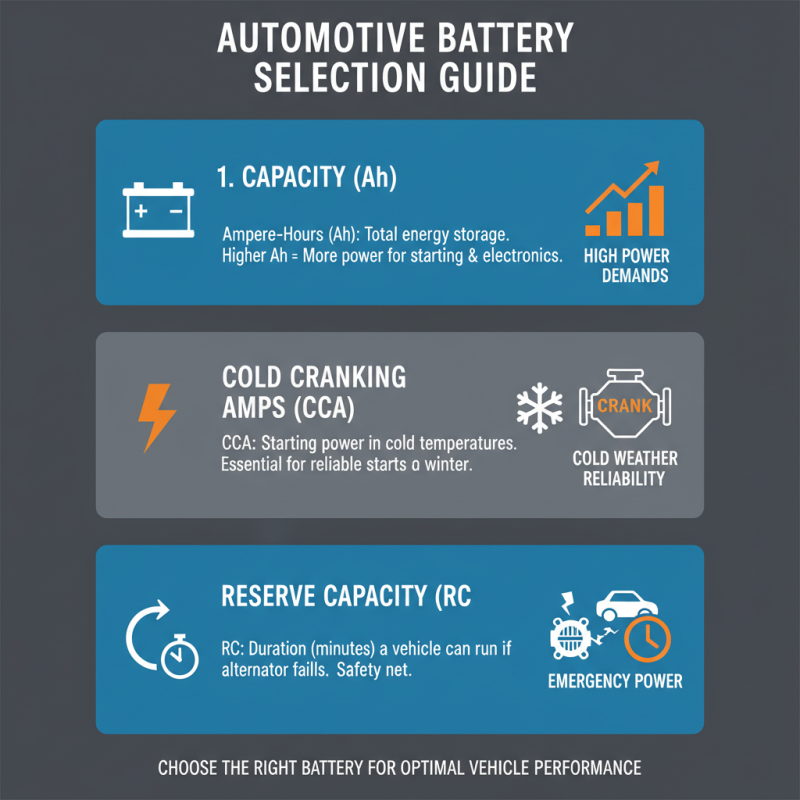
When selecting an automotive battery, certain key specifications should be prioritized to ensure optimal performance for your vehicle. First and foremost, the battery's capacity, measured in ampere-hours (Ah), indicates how much power it can deliver over a specified period. A higher amp-hour rating translates to more energy storage, which can be crucial for starting your engine and powering electrical components, particularly in vehicles with high power demands.
Another critical specification to consider is the cold cranking amps (CCA), which measures the battery's ability to start an engine in cold temperatures. A higher CCA rating is essential for vehicles operating in colder climates, as it ensures reliable starts even in frigid conditions. Additionally, the reserve capacity (RC) is a vital figure that represents how long the battery can run on its own power without the engine. In the event of a charging system failure, a battery with a higher reserve capacity can help provide enough power to keep critical systems operational until help arrives. By focusing on these key specifications, you can make a more informed decision in selecting the right automotive battery for your needs.
Understanding Different Types of Automotive Batteries Available
When selecting an automotive battery, it's crucial to understand the different types available in the market. The primary categories include
lead-acid batteries, absorbed glass mat (AGM) batteries, and lithium-ion batteries.
Lead-acid batteries are the most common and budget-friendly option, suitable for traditional vehicles. AGM batteries offer better performance, with faster recharging times and enhanced durability, making them ideal for vehicles with high energy needs.
Lithium-ion batteries, although less common in traditional vehicles, are gaining popularity due to their lightweight nature and ability to deliver consistent power.
Tips: When choosing between these types, consider your vehicle's energy requirements. If your car has a lot of electronic features, an AGM battery might be the better option. For those in colder climates, look for batteries optimized for low temperatures, as they can significantly impact starting power.
In addition to type, it's also important to consider factors like the battery's cold cranking amps (CCA) and reserve capacity (RC). CCA indicates the battery's ability to start an engine in cold conditions, while RC measures how long the battery can run on its own power without the engine. Always check the specifications of your vehicle to ensure compatibility, as this can help avoid potential issues down the line.
Evaluating Battery Capacity and Its Impact on Performance
When choosing an automotive battery, evaluating battery capacity is crucial as it directly impacts the vehicle's performance. Battery capacity is measured in ampere-hours (Ah) and indicates how much energy the battery can store. A higher capacity means the battery can power your vehicle's electrical components for a longer period, especially in demanding conditions such as cold weather or when using accessories like heated seats and high-powered audio systems. It’s essential to match the battery capacity to your vehicle's requirements to ensure reliable starting and operation.
Tips: Always check your vehicle’s owner manual for the recommended battery specifications. This ensures that you select a battery with an adequate capacity that meets your vehicle's needs while also maintaining efficient performance. Additionally, consider your driving habits. If you frequently engage in short trips or use many electronic accessories, a higher-capacity battery may be necessary to prevent discharging quickly.
Another vital factor to consider is the battery’s cold cranking amps (CCA), which measure its ability to start the engine in low temperatures. A battery with insufficient CCA can lead to starting issues, particularly in winter months. When selecting a battery, ensure its CCA rating aligns with your location’s typical weather conditions.
Tips: If you live in a colder climate, opt for a battery with a higher CCA rating to ensure reliability. Regular maintenance, such as cleaning the terminals and checking the charge level, can also help prolong the battery's life and performance.
Top 10 Factors to Consider When Choosing an Automotive Battery
This chart illustrates the top 10 factors to consider when evaluating an automotive battery, highlighting their importance ratings on a scale of 1 to 10. Focusing on capacity, CCA, and other attributes can significantly impact battery performance and overall vehicle reliability.
Factors Influencing Battery Lifespan and Durability
When selecting an automotive battery, understanding the factors that influence battery lifespan and durability is crucial for ensuring optimal performance. One of the primary elements affecting lifespan is the battery’s construction, particularly the materials used in its plates and electrolyte. According to the U.S. Department of Energy, lead-acid batteries—commonly used in vehicles—typically last between 3 to 5 years, whereas advancements in lithium-ion technology can extend this to 8-10 years under favorable conditions. The choice of manufacturing process and the quality of raw materials significantly impact not only the longevity but also the efficiency of the battery throughout its life cycle.
Temperature fluctuations also play a vital role in battery performance. A study by the University of Michigan found that extreme temperatures can reduce battery capacity by as much as 20% to 30%. Hot conditions can lead to excessive evaporation of electrolyte, while cold weather can increase internal resistance, making it challenging for the battery to deliver adequate power. Additionally, the frequency of use and charging habits further compound the effects of temperature on battery health. Regularly allowing the battery to drop below a certain charge level can shorten its lifespan, thus users should consider a maintenance routine that includes keeping the battery charged in line with recommended levels to enhance durability.
Cost Considerations and Budgeting for Automotive Batteries
When budgeting for an automotive battery, cost considerations play a pivotal role in ensuring you make a sound investment. Reports from the Battery Council International indicate that the average lifespan of a lead-acid battery is around three to five years, and the initial purchase price can range from $50 to $200, depending on the specifications and type. It’s crucial to assess the total cost of ownership, including replacement frequency and potential downtime, to avoid unexpected expenses.
In addition to the upfront costs, consumers should factor in installation fees, especially for complex battery systems that may require professional assistance. A study by the National Automobile Dealers Association suggests that battery installation can add an additional $20 to $50 to the total expense. Moreover, emerging technologies such as lithium-ion batteries tend to have a higher initial cost—with prices beginning at $200 and frequently exceeding $500—but they offer extended lifespan and efficiency, presenting a valid argument for long-term budgeting strategies. Therefore, making informed decisions by analyzing both immediate costs and long-term benefits is essential when selecting the right automotive battery for your needs.
Top 10 Factors to Consider When Choosing an Automotive Battery
| Factor |
Description |
Estimated Cost Range |
Lifespan (Years) |
Warranty Period |
| Type of Battery |
Choose between lead-acid, AGM, or lithium-ion. |
$50 - $300 |
3 - 10 |
1 - 5 years |
| Cold Cranking Amps (CCA) |
Measures the battery's ability to start in cold weather. |
$20 - $50 |
N/A |
N/A |
| Reserve Capacity (RC) |
Time battery can run on its own power without the engine. |
$10 - $30 |
N/A |
N/A |
| Maintenance Requirements |
Check for the need for regular topping up of fluid levels. |
$0 - $100 (related costs) |
N/A |
N/A |
| Compatibility |
Ensure the battery fits your vehicle's make and model. |
$0 - $100 (for fitment tools) |
N/A |
N/A |
| Depth of Discharge (DoD) |
Determines how much energy can be drawn without damage. |
$0 - $200 (higher cost for deeper DoD) |
N/A |
N/A |
| Temperature Tolerance |
Select batteries that perform well in varying temperatures. |
$0 - $50 |
N/A |
N/A |
| Eco-Friendliness |
Consider recyclable and environmentally safe options. |
$10 - $50 |
N/A |
N/A |
| Price |
Compare prices across similar specifications. |
$50 - $500 |
3 - 10 |
1 - 6 years |