How to Choose the Right Car Battery for Your Vehicle Needs
Choosing the right car battery for your vehicle is a crucial decision that can significantly impact your car's performance and reliability. According to a recent report by the Battery Council International, nearly 40% of all vehicle breakdowns are due to battery failures, highlighting the importance of selecting a battery that meets the specific requirements of your vehicle. With the diverse range of options available in the market, understanding the different types, sizes, and specifications of car batteries becomes essential for vehicle owners.
Expert in the automotive battery industry, Dr. Lisa Morton, emphasizes the importance of tailored choices: “Selecting the right car battery is not just about brand loyalty; it’s about ensuring compatibility with your vehicle’s electrical system and your driving habits.” This underscores the need for drivers to consider their unique requirements carefully before making a purchase. Whether you are looking for longevity, power output, or maintenance-free options, being informed about the characteristics of car batteries can help you make a more educated decision that will ultimately enhance your vehicle's efficiency and lifespan.

Understanding the Types of Car Batteries: Lead-Acid vs. Lithium-Ion
When it comes to selecting the right car battery, understanding the types available is crucial. The two dominant types of car batteries are lead-acid and lithium-ion, each offering distinct advantages suited to different vehicle needs. Lead-acid batteries, which have been the industry standard for decades, account for approximately 70% of the global automotive battery market, according to a report by Research and Markets. They are well-known for their reliability and affordability, making them an excellent choice for traditional combustion engine vehicles. With a typical lifespan of 3-5 years, lead-acid batteries provide sufficient cranking power and deep cycling for everyday driving.
On the other hand, lithium-ion batteries are gaining traction, particularly in electric and hybrid vehicles. They are lighter, more compact, and offer quicker charging capabilities compared to their lead-acid counterparts. A study conducted by BloombergNEF estimates that the cost of lithium-ion batteries has dropped by 89% from 2010 to 2020, making them increasingly accessible for broader automotive applications. Furthermore, lithium-ion batteries generally last longer, often exceeding 8 years, and provide more energy efficiency, which can translate to greater overall performance and lower long-term costs for electric vehicle owners. As the automotive industry evolves and the shift towards electrification increases, understanding these battery types will be vital for consumers looking to make informed decisions about their vehicle needs.
Key Specifications: Cold Cranking Amps (CCA) and Reserve Capacity (RC)
When choosing the right car battery, understanding two key specifications—Cold Cranking Amps (CCA) and Reserve Capacity (RC)—is essential. CCA is a measure of a battery's ability to start an engine in cold temperatures. It indicates how much current a battery can deliver at 0°F for 30 seconds while maintaining a voltage of at least 7.2 volts. According to industry standards, a typical passenger vehicle requires a CCA rating between 400 and 600 amps. However, more powerful vehicles or those operating in particularly cold climates may require batteries with higher CCA ratings, often exceeding 800 amps.
Reserve Capacity (RC) is another critical metric that measures how long a battery can run on its own power without the engine and is expressed in minutes. This specification is particularly relevant for drivers who may find themselves needing to run accessories while the engine is off or in situations where alternator output is compromised. A battery with an RC rating of 90 to 150 minutes is usually sufficient for most standard vehicles, but many experts recommend opting for higher capacities to ensure roadside safety and reliability during unexpected circumstances.
Properly evaluating both CCA and RC not only enhances vehicle performance but also extends battery lifespan, making them indispensable aspects of battery selection for vehicle owners.
Evaluating Your Vehicle's Electrical System Requirements
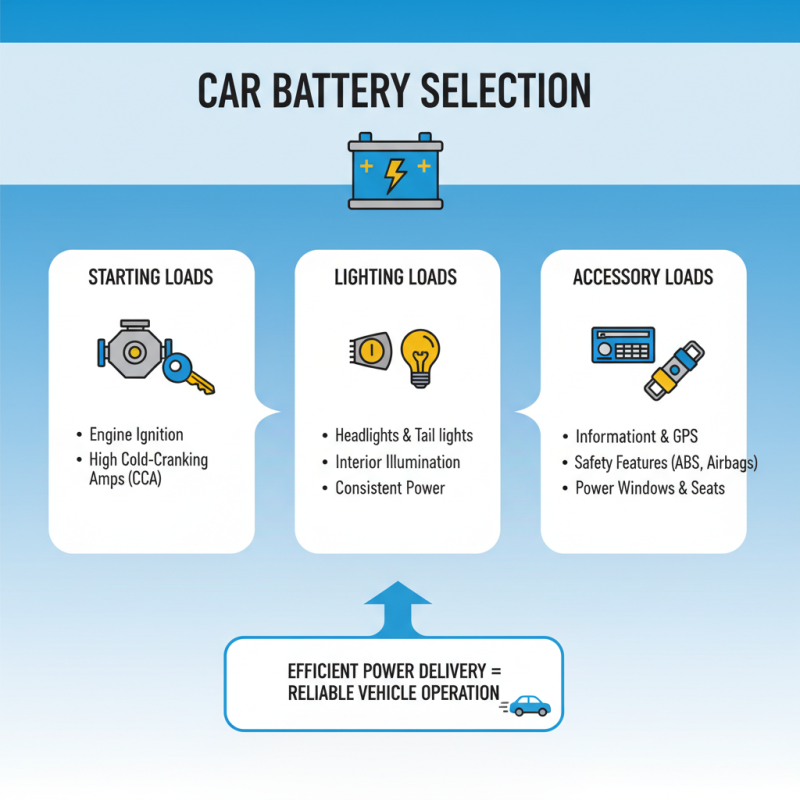
When selecting the right car battery for your vehicle, understanding the electrical system requirements is crucial. The electrical system powers not only the engine but also various components such as lights, infotainment systems, and safety features. Generally, a vehicle’s electrical demands can be categorized into starting, lighting, and accessory loads. A battery must efficiently meet these demands to ensure smooth operation and reliability.
Tips: Before purchasing a battery, check the specifications outlined in your vehicle’s manual. Look for details on the required cold cranking amps (CCA) and reserve capacity (RC), which indicate the battery’s ability to start the engine in cold weather and provide power when the engine isn't running.
Additionally, consider the age and condition of your current battery. If it's nearing the end of its lifespan, which is typically around three to five years, it may struggle to support electrical needs, especially in extreme conditions. Always inspect the battery terminals for corrosion, which can impede performance. Keeping your electrical system in good shape will ensure that your selected battery operates effectively and maintains the longevity of your vehicle’s components.
The Importance of Battery Size and Compatibility for Your Vehicle
When selecting a car battery, understanding battery size and compatibility is crucial for optimal vehicle performance. Different vehicles require specific battery sizes to fit correctly in the battery compartment. The most commonly used measurements are group sizes, which indicate the physical dimensions and terminal configurations. A battery that doesn't fit properly may not connect to the electrical system efficiently and can result in poor performance or even damage.
Compatibility goes beyond just size; it also involves the battery's type and specifications. Vehicles may vary in their voltage requirements and amperage needs, which must align with the battery's capabilities to ensure reliable starting power and effective operation. Checking the owner's manual can provide insights on the recommended battery type, while consulting with automotive professionals can help identify the right options that suit both the vehicle's specifications and the owner's driving habits. Ultimately, choosing the right battery size and ensuring it’s compatible with the vehicle is essential for longevity and efficiency.
How to Choose the Right Car Battery for Your Vehicle Needs
| Battery Size |
Compatibility |
Cold Cranking Amps (CCA) |
Reserve Capacity (RC) |
Lifespan (Years) |
| Group 24F |
Compatible with many sedans and SUVs |
600 CCA |
120 RC |
3-5 Years |
| Group 34 |
Fits compact cars and some crossover vehicles |
750 CCA |
90 RC |
4-6 Years |
| Group 65 |
Common in larger vehicles like trucks |
850 CCA |
140 RC |
5-7 Years |
| Group 78 |
Suitable for luxury cars and high-performance vehicles |
700 CCA |
110 RC |
4-6 Years |
Tips for Proper Maintenance and Optimal Battery Performance
Proper maintenance of your car battery is essential for ensuring optimal performance and longevity. According to a study by the Battery Council International, around 30% of car batteries are replaced prematurely due to neglecting maintenance. Regular checks, including monitoring electrolyte levels and cleaning terminals from corrosion, can significantly enhance battery lifespan. A simple practice, such as ensuring that the battery is tightly secured in its holder, can prevent vibrations that contribute to internal damage.
Temperature also plays a crucial role in battery health, with the Department of Energy noting that extreme heat can shorten battery life by causing fluid evaporation. Conversely, cold temperatures can reduce the battery's ability to start your vehicle. Therefore, parking in a garage during winter months and avoiding extreme heat exposure can protect your battery from damaging conditions. Furthermore, using a smart charger can keep your battery at an optimal charge level, reducing the risk of sulfation, which can impair battery function over time. By understanding these maintenance practices, car owners can maximize their battery’s performance and decrease the frequency of replacements.
Car Battery Capacity Comparison
This bar chart compares the capacity of different types of car batteries measured in ampere-hours (Ah). Understanding battery capacity is crucial for selecting the appropriate battery for your vehicle's needs.