Why Your Auto Battery Keeps Dying and How to Fix It for Good

Are you frustrated with your auto battery constantly dying? This common issue plagues many vehicle owners and can be attributed to a variety of factors. From leaving your lights on overnight to faulty electrical systems, understanding the root causes can empower you to take control over your battery's lifespan. An auto battery is a crucial component that powers not only your vehicle's ignition but also its various electrical systems.

In this guide, we will explore the primary reasons behind the repeated failures of auto batteries and provide actionable solutions to ensure your battery remains reliable for the long haul. By identifying the signs of a failing auto battery and recognizing the maintenance practices that can enhance its durability, you can prevent those frustrating moments of being stranded. Whether you're dealing with extreme weather conditions or simply a lack of regular maintenance, knowledge is your best defense against auto battery woes. Let's dive into the effective strategies to fix the issue for good!
Why Your Auto Battery Keeps Dying and How to Fix It for Good

Common Reasons for Auto Battery Failure: An Overview

Why Your Auto Battery Keeps Dying and How to Fix It for Good

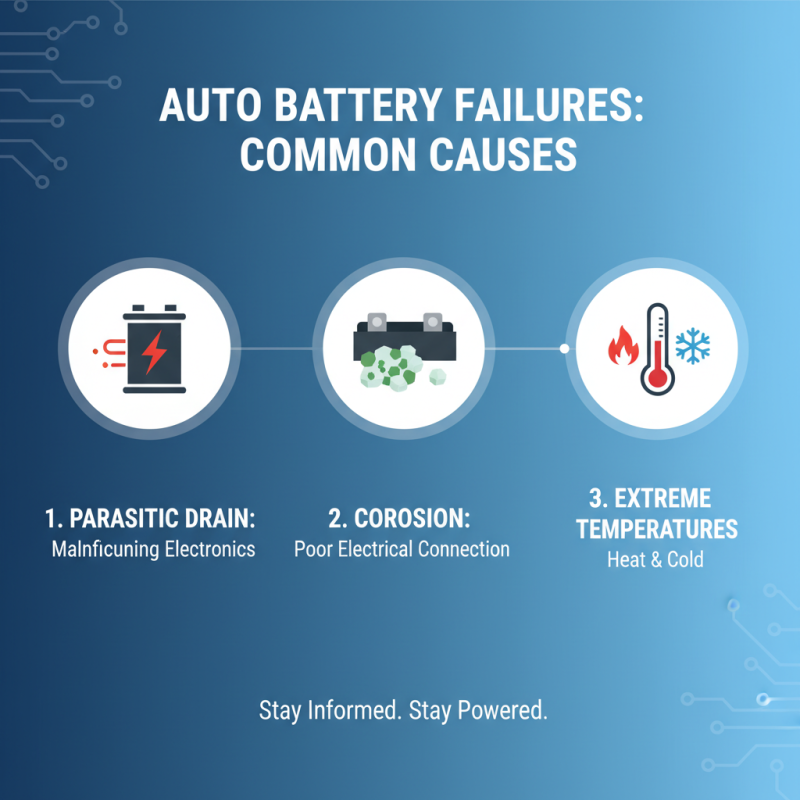
Auto battery failures can be frustrating and inconvenient, with several common reasons behind these issues. One primary culprit is a parasitic drain, where electrical components continue to use power even when the car is off. This can happen due to malfunctioning lights, stereo systems, or other electronic devices. Another frequent reason is the accumulation of corrosion on battery terminals, which can impede the electrical connection. Additionally, extreme temperatures—both hot and cold—can significantly affect battery performance and lifespan.

To help mitigate these problems, regularly inspect your battery and its connections for any signs of corrosion or loose terminals. Keeping the battery clean and ensuring that all components are functioning properly can prevent many issues. It’s also wise to limit the time you leave accessories on while the car is off.

Lastly, consider the age of your battery. Most batteries last between three to five years, so if you're nearing this timeline, it may be time for a replacement. Maintain records of your battery's performance and keep track of any electrical issues that arise, as this can help you address problems swiftly and ensure your vehicle remains reliable.
How Environmental Factors Affect Battery Performance

Environmental factors play a significant role in battery performance and longevity. Extreme temperatures, whether high or low, can negatively impact the chemical reactions within the battery. In colder conditions, the battery’s capacity to generate power diminishes, which can lead to difficulty in starting the vehicle. Similarly, high temperatures can cause the battery’s fluid to evaporate, resulting in overheating and reduced efficiency. This combined effect of temperature extremes can ultimately shorten the overall lifespan of the battery.

Additionally, humidity and exposure to corrosive elements can affect battery terminals and connections. High humidity levels can lead to moisture accumulation, promoting corrosion. This corrosion can create resistance in the electrical connections, causing the battery to work harder and eventually leading to premature failure. Proper maintenance, such as regularly cleaning terminals and ensuring a secure connection, is essential to mitigate these effects and enhance battery resiliency against environmental stressors.

By understanding and addressing these factors, vehicle owners can improve battery performance and reduce the likelihood of sudden failures.

Signs Your Battery Is Dying: What to Look For

When it comes to auto batteries, being aware of the signs of a dying battery can save you from unexpected breakdowns and the inconvenience of being stranded. One of the most common indicators is a slow engine crank. If you notice that your engine takes longer than usual to start, it could be a sign that your battery is struggling to provide enough power. Additionally, if you hear a clicking noise when turning the key in the ignition, this is often a telltale sign that the battery may not have sufficient voltage to engage the starter motor.

Another warning sign to watch for is dim or flickering headlights. If your headlights appear weaker than normal or flicker when the car is idling, this could indicate low battery voltage or a failing battery. You should also keep an eye out for warning lights on your dashboard, particularly the battery warning light. If this light illuminates while you are driving, it’s crucial to have the battery checked as it may be on the verge of failure. Lastly, physical signs such as corrosion on battery terminals or swelling of the battery case can also signal that your battery is nearing the end of its life and requires immediate attention.

Preventive Measures to Extend Your Battery Life

A car battery typically lasts between three to five years, but various factors can lead to premature failure. Ensuring that you take preventive measures can significantly extend the lifespan of your battery. One critical step is to routinely inspect the battery terminals for corrosion and maintain a clean connection. According to the Battery Council International, approximately 30% of battery failures are due to faulty terminals or connections.

Additionally, drive your vehicle regularly, as infrequent use can cause the battery to discharge. A study by the Electric Power Research Institute indicates that short trips can be detrimental, as the battery may not get enough time to recharge fully after starting. To mitigate this, consider taking your car for a longer drive at least once a week.

Tips:

1. Keep your battery charged by driving for at least 20 minutes regularly. This helps to prevent sulfation, which occurs when lead sulfate crystals form on the battery plates, reducing performance.

2. If you notice dim lights or sluggish electrical components, have your battery tested immediately. It’s recommended to get a load test done at least once a year to catch potential issues early.

3. Protect your battery from extreme temperatures by parking in shaded or covered areas, as heat can accelerate battery degradation while cold can impair starting power.

Why Your Auto Battery Keeps Dying and How to Fix It for Good - Preventive Measures to Extend Your Battery Life

Reason for Battery Drain Description Preventive Measures Estimated Lifespan Impact
Old Age Batteries typically last 3-5 years. Regularly check battery health and replace when needed. N/A
Parasitic Draw Electronics that remain on draw power. Disconnect battery when not in use for long periods. Can reduce lifespan by weeks to months.
Extreme Temperatures High heat can evaporate battery fluid, while cold can reduce capacity. Park in shaded or temperature-controlled areas. May shorten lifespan by up to 30%.
Corroded Connections Corrosion can interrupt the power flow. Regularly clean battery terminals and connections. Can lead to premature battery failure.
Faulty Charging System Alternator problems prevent proper charging. Have charging system inspected regularly. Reduces battery lifespan significantly.

Effective Solutions for Troubleshooting Battery Issues

Battery issues are a common problem for vehicle owners, often leading to unexpected breakdowns and frustration. According to a recent report by the Battery Council International, over 25% of drivers face battery-related problems each year. Identifying the root cause of frequent battery failures can save both time and money, ensuring your vehicle is reliable when you need it most.

One key factor contributing to battery drain is the age of the battery. Most auto batteries have a lifespan of about 3 to 5 years. Regularly testing the battery's health is crucial, especially as it approaches the end of its expected life. Utilizing a multimeter can help measure the battery's voltage, confirming whether it’s functioning properly. Additionally, checking the battery terminals for corrosion and ensuring they are tightly connected can prevent unnecessary power loss.

Tips: If you notice your vehicle is struggling to start or the accessories are slower than usual, consider getting your battery checked. Testing in several different conditions can provide insights into whether temperature or usage patterns are contributing to battery drain. Another effective solution is to ensure that all lights and electronic devices are turned off when the vehicle is not in use. Simple habits can lead to significant improvements in battery longevity and reliability.

Reasons for Auto Battery Failure