The 2026 search for the best Ultrapure Water Equipment begins with a practical question: best for which process, feedwater, and risk profile? A semiconductor laboratory may require resistivity near 18.2 MΩ·cm, while a pharmaceutical plant needs validated systems, documented sanitization, and controlled microbial performance. One specification cannot serve every buyer.
Global pressure is increasing. The WHO and UNICEF Joint Monitoring Programme reported that 2.2 billion people lacked safely managed drinking water in 2022. UNESCO’s United Nations World Water Development Report 2024 also highlighted agriculture’s dominant share of freshwater withdrawals. These figures do not measure ultrapure water directly. They do show why recovery rates, wastewater control, and stable operation matter beyond the equipment room. Grand View Research’s 2024 market analysis identified semiconductors, pharmaceuticals, and healthcare as major ultrapure-water demand sectors. Demand is expanding, but procurement mistakes remain expensive.
This guide compares pretreatment, reverse osmosis, electrodeionization, ultrafiltration, UV, and final polishing technologies. It also examines ASTM D5127, ISO 3696, USP expectations, monitoring accuracy, service coverage, and lifecycle cost. A promising system can still fail with poor feedwater mapping or weak after-sales support. Small details matter: a clogged 5-micron filter, a drifting conductivity sensor, or an undersized storage loop can interrupt production. No ranking is perfect. Regional water chemistry, energy prices, operator skills, and validation rules can change the result. Buyers should challenge every “best” claim, request performance evidence, and verify local technical support before signing a 2026 purchase contract.
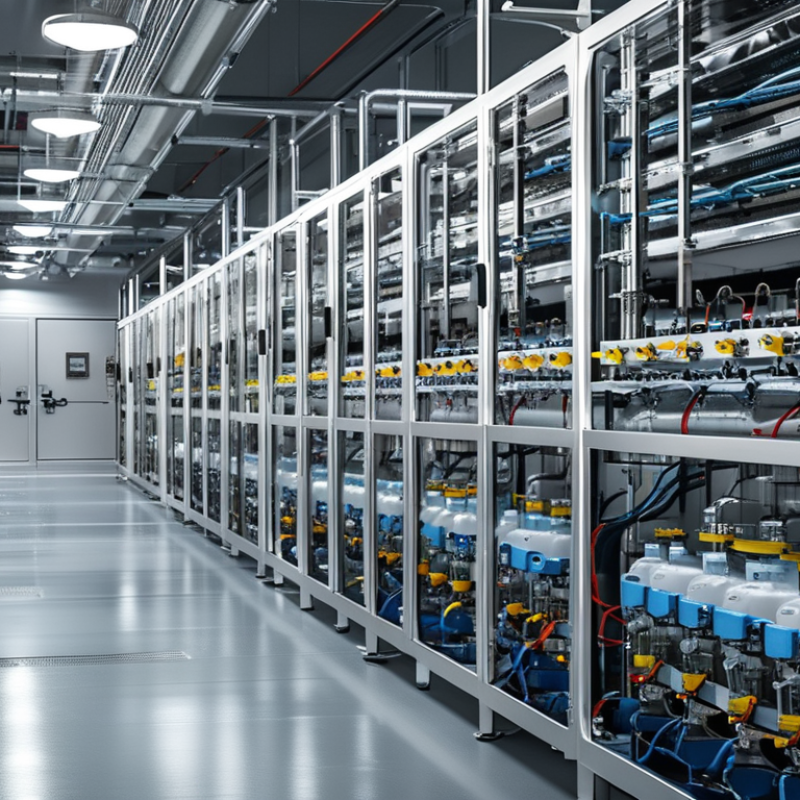
Ultrapure water equipment is a treatment system designed to remove ions, organic compounds, particles, microorganisms, and dissolved gases. It usually combines pretreatment, reverse osmosis, deionization, ultraviolet treatment, ultrafiltration, and final polishing. The exact configuration depends on the application, feedwater quality, and required purity.
The highest laboratory grades may approach 18.2 megohm-centimeter resistivity at 25°C. However, resistivity alone does not prove water quality. Reliable systems also monitor total organic carbon, particle levels, microbial contamination, pressure, temperature, and filter condition. A small display reading can look reassuring while an exhausted filter quietly affects test results. That weakness deserves attention.
Why is this equipment needed? Trace contaminants can distort analytical data, damage sensitive instruments, interfere with cell culture, or leave residues on precision components. Pharmaceutical, semiconductor, research, and medical laboratories may require different purity levels and validation controls. Buyers should examine recovery rate, operating costs, maintenance access, alarm records, and local service capability. A technically powerful system may still be a poor choice if replacement parts arrive slowly or operators lack training.
Water quality also changes with seasons and building plumbing. Feedwater should be tested before equipment selection. Routine sanitization, calibration, filter replacement, and documented sampling are essential. Even well-designed equipment cannot correct careless operation. Specifications are useful, but daily verification matters more.
| Equipment or Process Stage | Primary Function | Typical Water-Quality Performance | Typical Operating Requirements | Best-Fit Applications | Key Buyer Considerations |
|---|---|---|---|---|---|
| Pretreatment and Multimedia Filtration | Removes suspended solids, turbidity, iron, manganese, and larger particulate matter before membrane treatment. | Can reduce turbidity to approximately <1 NTU when properly designed; protects downstream membranes from rapid fouling. | Usually requires periodic backwashing. Feed-water pressure commonly ranges from approximately 2 to 6 bar, depending on the system design. | Municipal water, well water, industrial utility water, and surface-water sources. | Review raw-water analysis, turbidity variation, iron and manganese levels, backwash-water availability, and media replacement intervals. |
| Activated-Carbon Filtration | Reduces chlorine, chloramine, taste-and-odor compounds, and selected dissolved organic contaminants. | Protects polyamide reverse-osmosis membranes from oxidative damage. Chlorine at the RO inlet is generally required to be effectively removed. | Requires adequate empty-bed contact time, routine backwashing, and monitoring for bacterial growth or carbon exhaustion. | Feed water containing disinfectant residuals or organic compounds. | Confirm whether the local water supply uses free chlorine or chloramine; chloramine may require specialized carbon capacity or an additional removal step. |
| Cartridge or Microfiltration | Captures fine particles and protects high-pressure pumps, RO membranes, and downstream ion-removal modules. | Common nominal ratings include approximately 1 to 5 micrometres; finer absolute-rated filters may be selected for sensitive systems. | Pressure-drop monitoring is essential. Cartridges are replaced when differential pressure or contamination reaches the specified limit. | Laboratories, semiconductor support systems, pharmaceutical utilities, and precision manufacturing. | Check filter rating, housing material, flow capacity, seal compatibility, and availability of replacement cartridges in the destination market. |
| Reverse Osmosis (RO) | Removes most dissolved salts, microorganisms, colloids, and many organic contaminants through a semipermeable membrane. | Typical single-pass salt rejection is approximately 95% to 99% or higher, depending on membrane type, feed quality, temperature, and recovery. | Often operates at approximately 8 to 20 bar for municipal feed water. Recovery commonly ranges from about 50% to 85%, depending on design and scaling risk. | Core purification stage for laboratory, healthcare, industrial, and pharmaceutical water systems. | Evaluate feed-water conductivity, hardness, silica, temperature, recovery rate, concentrate disposal, membrane-cleaning provisions, and energy use. |
| Ultrafiltration (UF) | Removes suspended solids, colloids, bacteria, endotoxins, and high-molecular-weight organic matter by size exclusion. | Typical membrane pore-equivalent molecular-weight cutoffs are approximately 10,000 to 200,000 daltons; microbial and endotoxin reduction depends on membrane integrity and operating conditions. | Usually operates at lower pressure than RO and may use cross-flow, backwash, air scour, or chemical cleaning. | High-purity process water, biotechnology, pharmaceutical water preparation, and final particulate or endotoxin control. | Confirm endotoxin-performance data, integrity-testing method, cleaning compatibility, flux, and the effect of feed-water temperature. |
| Electrodeionization (EDI) | Continuously removes ionized impurities using ion-exchange resins, selective membranes, and an electric field. | Product-water resistivity commonly reaches approximately 5 to 18 megohm-centimetres at 25°C when supplied with suitable RO permeate. | Requires low-hardness RO permeate, stable flow, suitable conductivity, and continuous electrical power. Chemical regeneration is generally not required during normal operation. | Continuous production of high-purity water for laboratories, electronics, power generation, and pharmaceutical utilities. | EDI is not a substitute for RO pretreatment. Check carbon dioxide, silica, hardness, boron, feed conductivity, and manufacturer feed-water limits. |
| Mixed-Bed Ion-Exchange Polishing | Removes residual cations and anions after RO or EDI to achieve very low ionic contamination. | Can produce water approaching 18.2 megohm-centimetres at 25°C when resin condition, flow, and feed quality are properly controlled. | Resin capacity is finite. Cartridges or tanks require replacement or off-site regeneration when resistivity declines. | Analytical laboratories, trace-element analysis, chromatography, molecular biology, and precision rinsing. | Consider resin type, exchange capacity, cartridge changeout logistics, pressure drop, and the cost of certified replacement media. |
| Ultraviolet Oxidation | Uses ultraviolet energy to reduce microorganisms and photo-oxidize trace organic compounds, especially at approximately 185 nm and 254 nm wavelengths. | UV systems may support microbial control and help reduce total organic carbon to low-ppb levels when water quality, dose, and lamp condition are suitable. | Requires adequate UV transmittance, lamp monitoring, quartz-sleeve cleaning, and periodic lamp replacement. UV does not remove dissolved ions. | Final polishing for laboratory water, semiconductor processes, analytical chemistry, and sensitive rinsing operations. | Specify UV wavelength, validated dose, sensor type, lamp-life expectation, replacement cost, and expected TOC reduction under actual flow conditions. |
| Final Point-of-Use Filter | Provides final removal of particles and microorganisms immediately before dispensing or process use. | Common membrane ratings range from approximately 0.1 to 0.22 micrometres for microbial control, subject to validated integrity and operating conditions. | Requires regular replacement, hygienic installation, low-dead-volume design, and protection against secondary contamination. | Cell culture, microbiology, analytical instruments, pharmaceutical preparation, and critical rinsing. | Check membrane material, extractables, sterilization method, flow rate, connection type, and compatibility with the intended application. |
| Storage Tank and Recirculation Loop | Stores purified water while limiting microbial growth, particulate ingress, and quality deterioration during distribution. | Maintains water quality only when the tank, piping, circulation velocity, sanitization, and environmental controls are properly managed. | Common design features include sanitary fittings, smooth internal surfaces, vent filtration, continuous recirculation, and periodic thermal or chemical sanitization. | Centralized laboratory systems, healthcare facilities, pharmaceutical utilities, and multi-point industrial distribution. | Review tank volume, residence time, loop velocity, dead legs, material compatibility, drainability, vent-filter protection, and sanitization validation. |
| Online Monitoring and Control | Measures conductivity or resistivity, temperature, total organic carbon, flow, pressure, tank level, and selected microbial indicators. | For Type I laboratory water, a common target is approximately 18.2 megohm-centimetres at 25°C; TOC targets are often in the low-ppb range, depending on the application. | Requires calibrated sensors, temperature compensation, alarm limits, data logging, and preventive maintenance. | All systems where consistent quality, traceability, and rapid fault detection are important. | Confirm calibration procedures, sensor accuracy, alarm history, remote access, audit trails, language support, and local electrical compatibility. |